Breakage and bending
Objects deliberately destroyed before deposition — killed, in the literature.
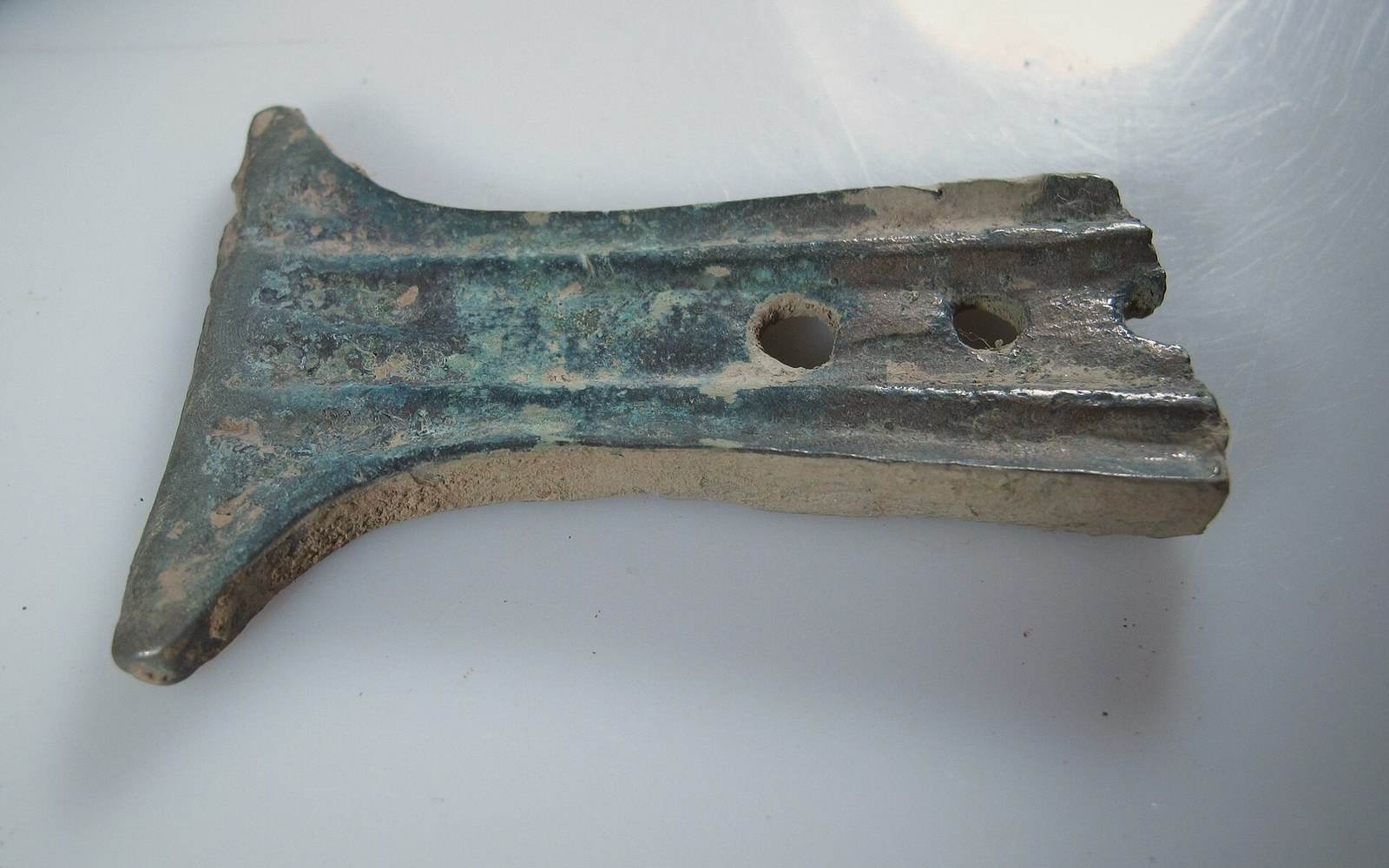
A hoard sword photographed oblique to show deformation. Both readings of deposition agree this was done deliberately.
Photo: Bronze Age Hoard, sword oblique (FindID 571436) · Wikimedia CommonsBefore they go in, they are unmade
A sword recovered from a river or bog is rarely intact. Blades are folded back on themselves, spearheads have their sockets crushed, axes arrive in two pieces at a clean break. The damage is too consistent to be accidental, and too deliberate to be explained by battlefield loss. In the literature this is called "killing" — the intentional destruction of an object before it is deposited.
Chronology and distribution
- Practice spans much of the European Bronze Age
- Geographic range: Thames to Rhine river assemblages; Danish and north European bogs
- Consistent object types affected: swords, spearheads, socketed axes, sheet-bronze vessels
The pattern is widespread across Bronze Age Europe and persistent across centuries. Swords bent at mid-blade appear in river assemblages from the Thames to the Rhine. Sheet-bronze vessels found in Danish bogs are crumpled or punctured in ways that required sustained effort; a bronze vessel does not fold easily. Some pieces have been heated before bending — the metal's grain structure shows it — while others were simply forced cold, leaving characteristic stress fractures at the break point.
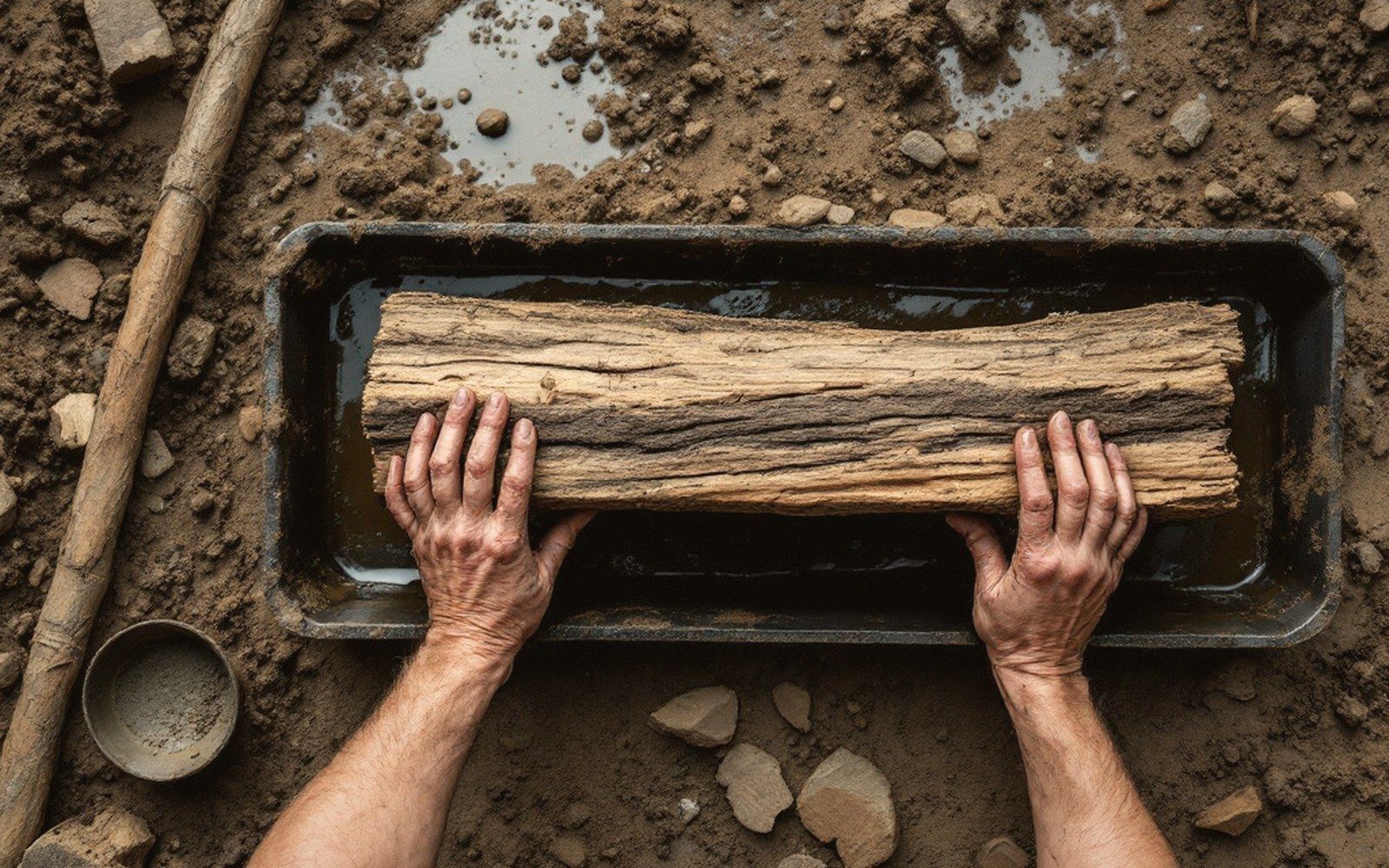
Waterlogged oak has the strength of soaked cardboard. It is lifted wet, carried wet and stored wet.
What this tells us is less settled. One interpretation treats killing as a form of dedication: making the object permanently unavailable to the living converts it into something else, something that belongs to the place or the power it is being offered to. On this reading, an intact sword deposited in a river would be too easily retrieved, its value too obviously worldly. Breaking it closes the transaction. A variant argument is that killing prevented re-melting — a deliberately bent blade cannot easily be fed back into a crucible without considerable effort — though the practical and the ritual are not mutually exclusive.
What the record shows
| Item | What the record says |
|---|---|
| Killing | deliberate destruction of an object before deposition, a term used in the archaeological literature |
| Stress fractures at break point | distinguish deliberate cold-breaking from casual damage |
| Heated before bending | visible in altered grain structure of the metal |
A second possibility is social rather than cosmological. Destroying a weapon publicly removes it from circulation, as a gesture of status precisely because it is wasteful. This reading fits the broader pattern of deliberate deposition in rivers and bogs, where what matters is loss, not recovery.
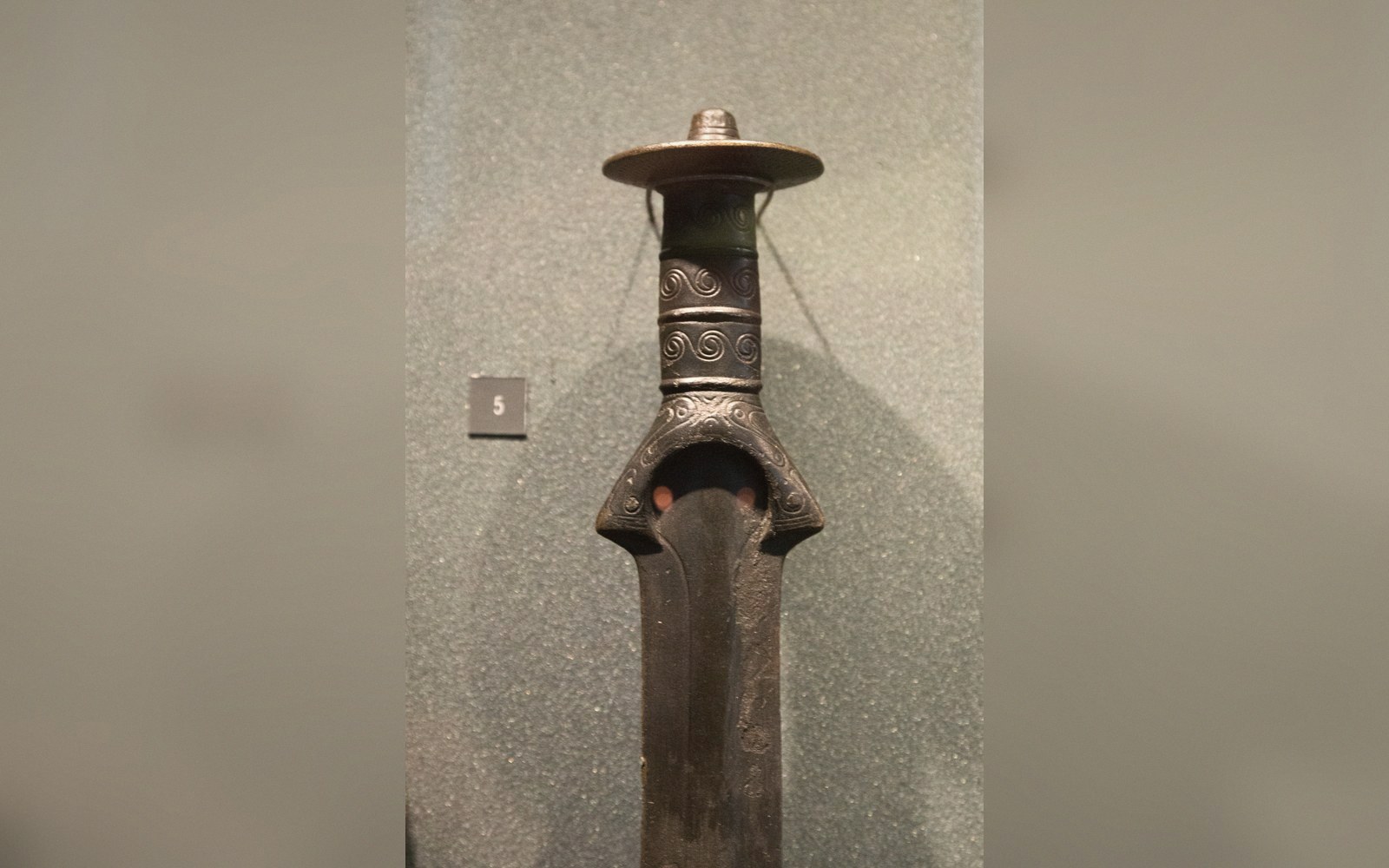
A blade on the bench before cleaning, corrosion intact. Most of what is known about typology was read off objects in this state.
Photo: Sword, Late Bronze Age, City of Prague Museum, 175563 · Wikimedia CommonsWhat the record does not support is the idea that these objects were broken in use and then discarded. The breaks are in the wrong places for battle damage, and the bending often requires more force than combat would generate. Someone chose to do this. The regularity of the practice — the same treatment of the same object types across large geographic ranges — suggests shared convention, not individual impulse. Whatever it meant in detail, killing an object before giving it to water or ground was, for much of the European Bronze Age, how you gave properly.