River metalwork
Swords and spearheads recovered from rivers in numbers that cannot be accidental loss.
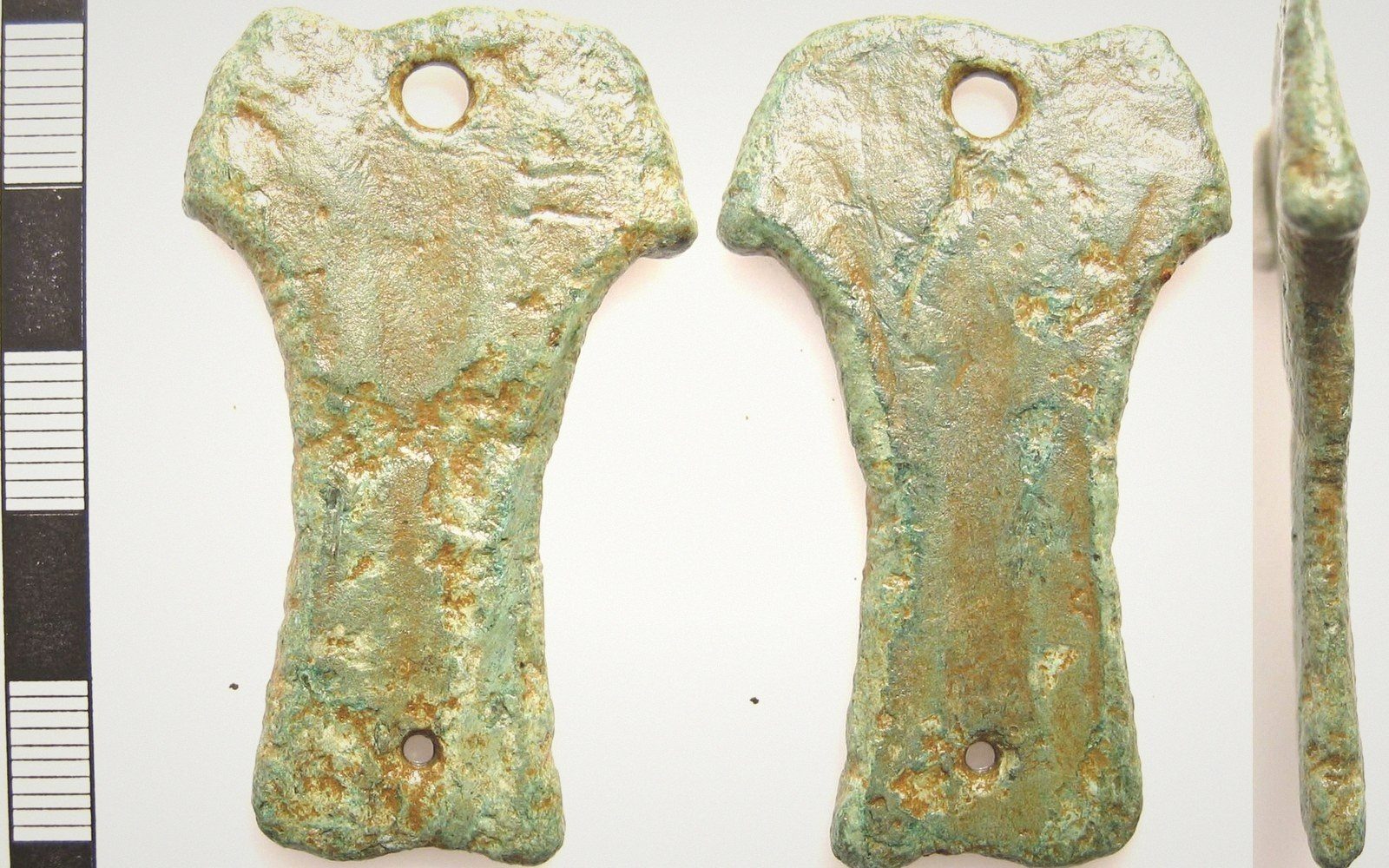
A sword handle fragment recovered from a river. Weapons dominate the river record; tools barely appear in it.
Photo: Bronze Age sword handle fragment (FindID 113974) · Wikimedia CommonsThe deposition problem
Pull a Bronze Age sword from a gravel bar in the Thames and there is an immediate temptation to reach for the obvious explanation: it fell in, or the boat carrying it capsized. That explanation collapses under the weight of numbers. The Thames has yielded well over three hundred Bronze Age swords, along with hundreds of spearheads, rapiers, dirks and axes — a density of metalwork that stretches from the upper river down to the tidal estuary. The Seine, the Rhine, the Saône, the Shannon: wherever archaeologists have looked carefully at major river systems, the pattern repeats. Bronze Age metal comes out of rivers at a rate that simple loss cannot account for.
Most of the river metalwork we study was not found by archaeologists at all.
The argument from numbers alone is strong, but it is sharpened by what the objects look like. Many river swords are complete, unbroken and functionally sound at the time of deposition — no casting flaws, no damage consistent with combat or accident. Others are bent or broken in ways that look deliberate, the metal treated before it went in rather than fractured by current or sedimentation. Objects tend to cluster at specific crossing points, confluences and reaches that show up repeatedly across centuries of deposition. These are not random positions. They are the places where people engaged with a river most intensely: fords, ferries, the point where two waterways joined and the social geography of a region was, quite literally, knotted together.
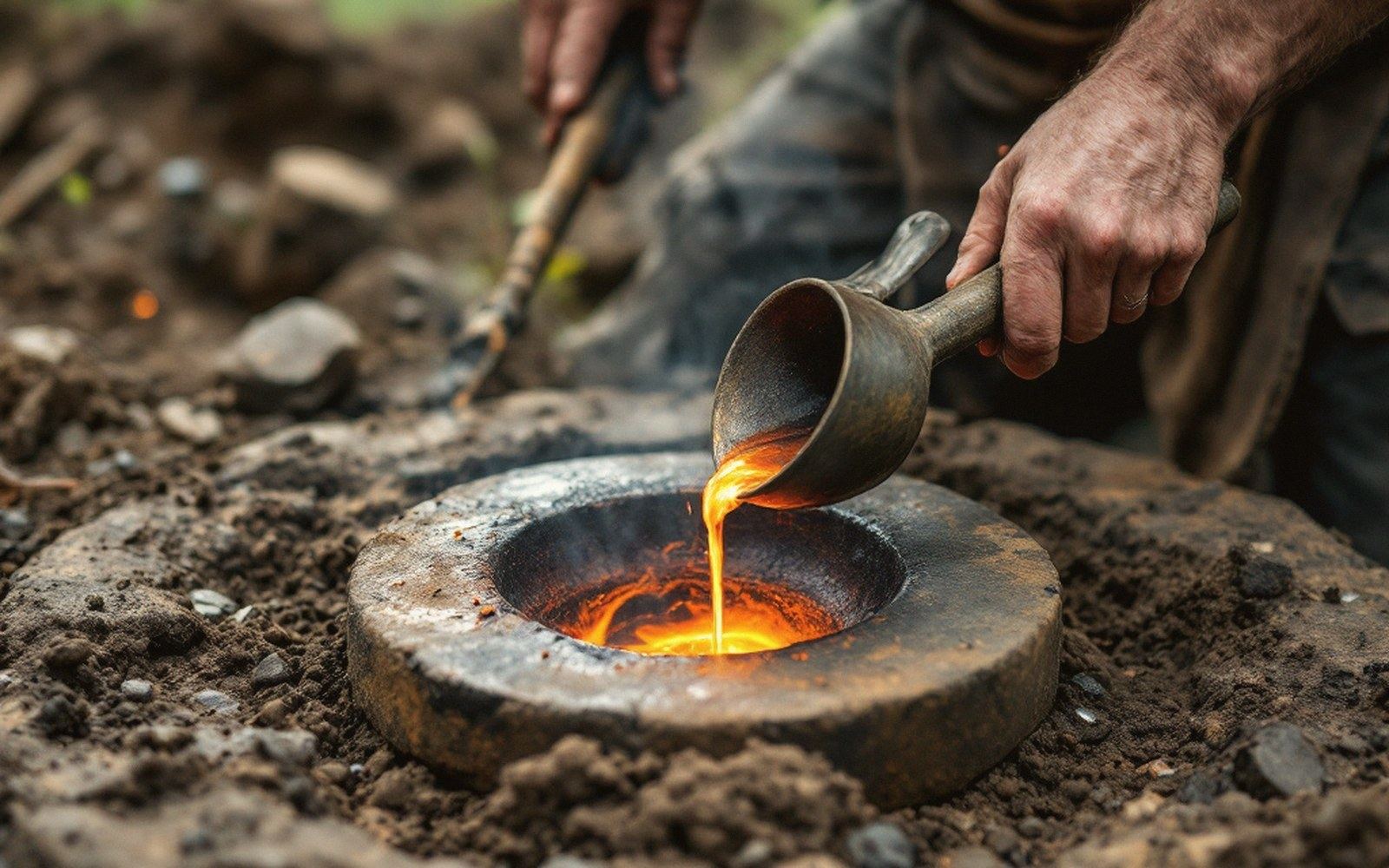
The pour cannot be paused, corrected or repeated. Everything before it is preparation for about twenty seconds of work.
Dredged, snagged and recovered
Most of the river metalwork we study was not found by archaeologists at all. The Thames swords came up in dredging campaigns through the nineteenth and early twentieth centuries, when the river was deepened for commercial navigation. Many passed straight into private hands, appearing later in auction catalogues with little more than "from the Thames" as a provenance. The same is true of the Seine hauls, catalogued by French scholars working from dealer records and museum acquisitions. This provenance problem matters: without precise findspot coordinates, the clustering patterns can only be established approximately, and any object lifted in isolation carries almost no contextual information about what it lay beside.
Numbers and scale
| Item | What the record says |
|---|---|
| Thames Bronze Age swords: over 300 recovered; additional hundreds of spearheads, rapiers and axes | |
| Major deposition rivers: Thames, Seine, Rhine, Saône, Shannon | pattern consistent across northwest Europe |
| Most finds: recovered by dredging in 19th–early 20th century; precise findspots rarely recorded | |
Where careful recording has been possible — at a handful of sites where licensed diving or controlled dredging allowed proper observation — the results have been striking. At certain Thames reaches, swords of different typological dates lie in the same restricted area, implying return visits to a chosen spot across generations. Some objects show wear consistent with use before deposition; others appear essentially new. The mix suggests that the motivation was not simply the disposal of worn-out equipment, and it was certainly not the stockpiling logic of a scrap hoard on dry land.
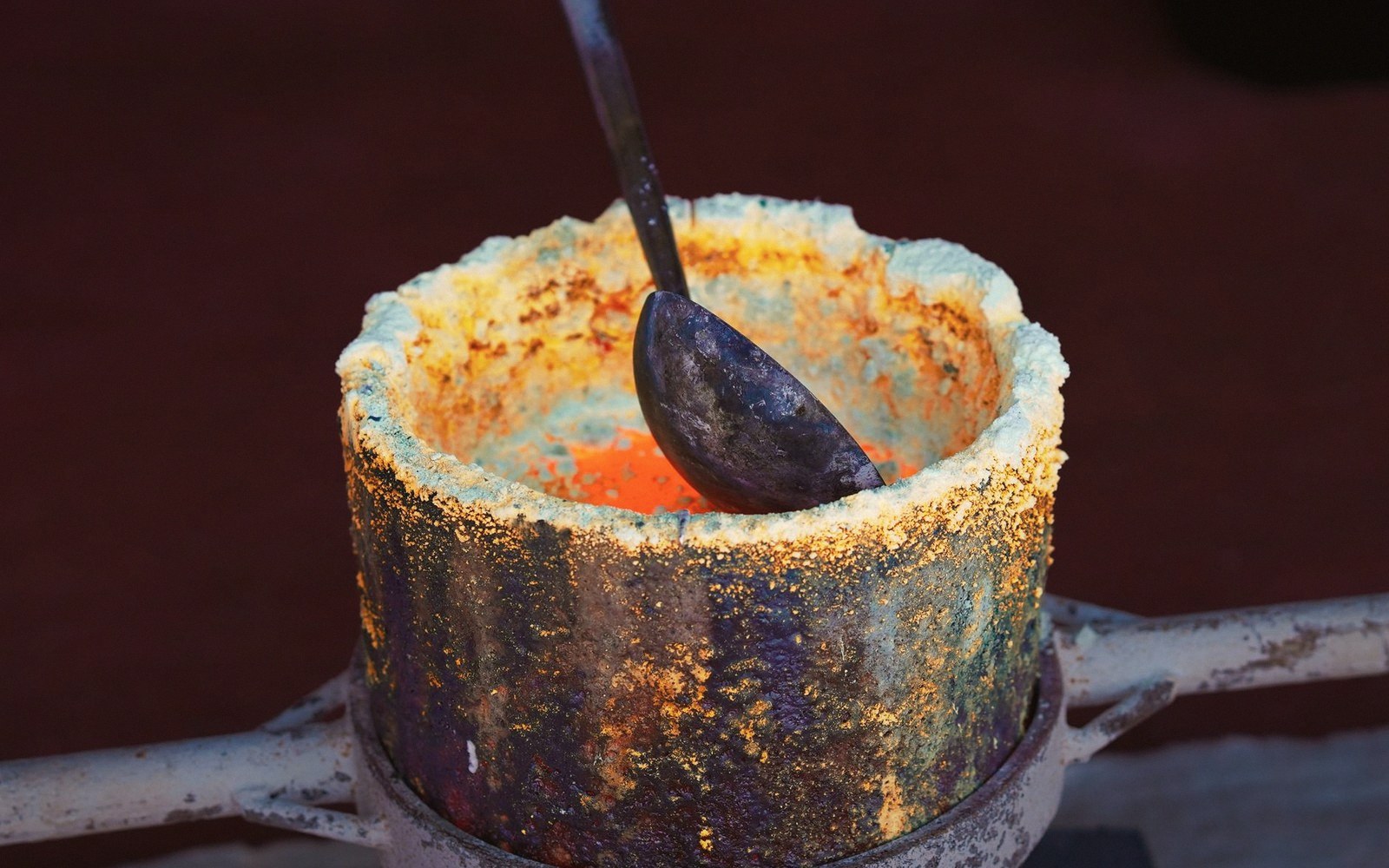
Charcoal, forced air and a crucible sitting in the fuel rather than above it.
Photo: Panta Singha / PexelsWhat the metalwork says about intent
The question of intent is where interpretation becomes genuinely contested. The dominant framework in current scholarship treats river deposition as votive in character: metal was given to the water, to whatever power the water embodied or transmitted, and the giving was the point. The objects were meant to stay there. This reading aligns river finds with the deliberate deposits recovered from bogs and fens — contexts that also preserve organic material occasionally associated with metalwork, making the votive case easier to argue because nothing suggests retrieval was ever planned.
What the objects look like
| Item | What the record says |
|---|---|
| Complete, undamaged swords | inconsistent with accidental loss |
| Bent or broken examples | deliberate pre-deposition treatment |
| Clustering at fords, confluences and crossing points | repeated across centuries |
| Mix of worn and apparently new objects in same reach | not simple disposal of spent equipment |
Dissenting voices note that rivers are dynamic environments, that objects move with flood events and can accumulate in gravel traps far from where they entered the water, and that our pattern-recognition may be partly an artefact of where dredging happened most intensively. These are legitimate cautions. But they do not dissolve the problem. Even accounting for transport by current, the functional quality of many river swords, the absence of associated domestic refuse, the targeting of specific river features across long periods of time, and the sheer scale of the assemblages push against any reading that treats the Thames or the Seine as a scrapyard of accidental losses.
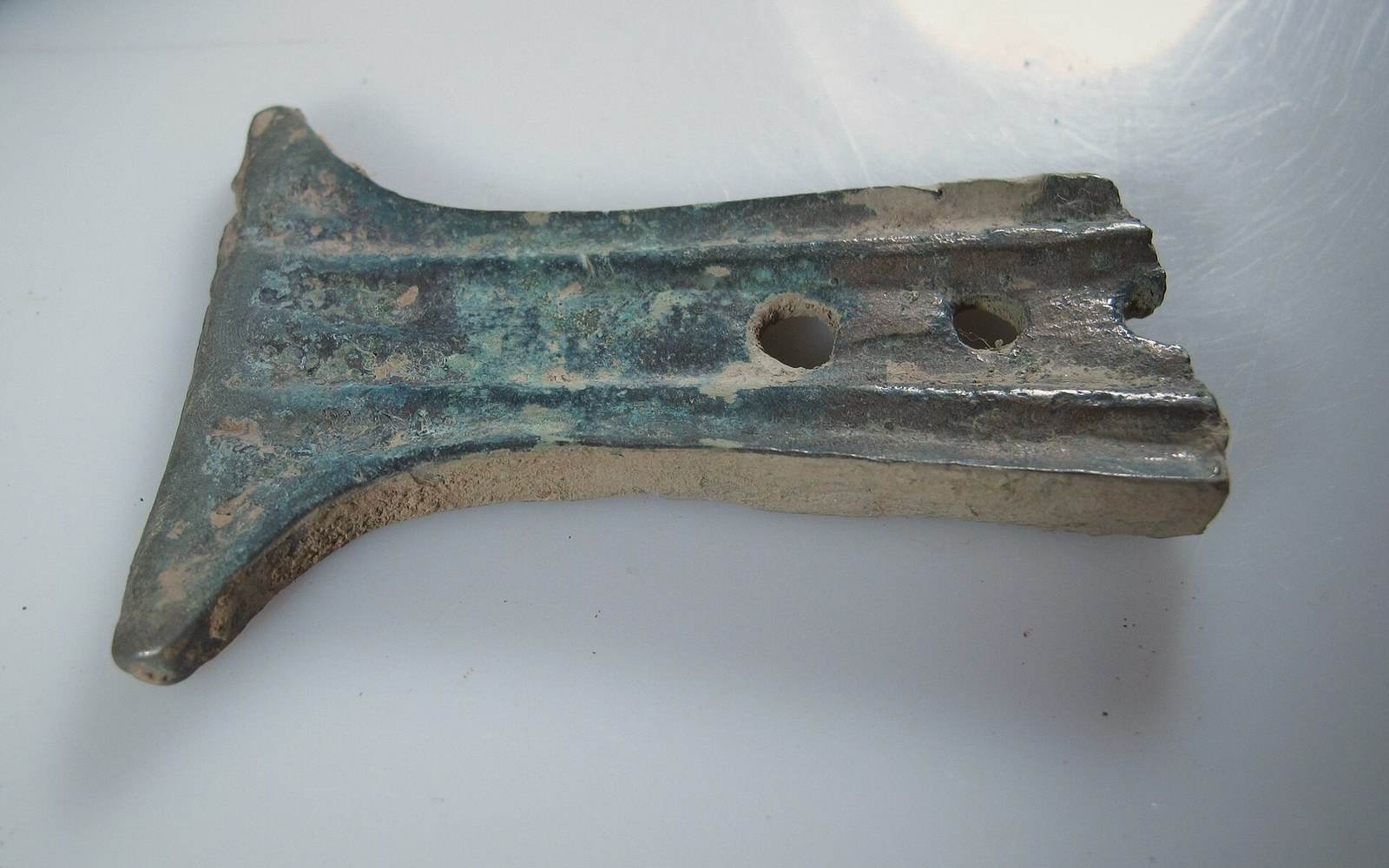 Plate iii
A hoard sword photographed oblique to show deformation. Both readings of deposition agree this was done deliberately.
Photo: Bronze Age Hoard, sword oblique (FindID 571436) · Wikimedia CommonsWhat the river metalwork establishes, more securely than almost any other class of evidence, is that breakage and bending and deliberate deposition were not confined to hidden hoards or remote bogs. They happened in open, socially significant water, in places everyone knew, perhaps in sight of everyone watching. The river received the metal publicly. That, arguably, was the entire point.