Hoards, and what they are not
Not always hidden wealth; often the point was that it stayed there.
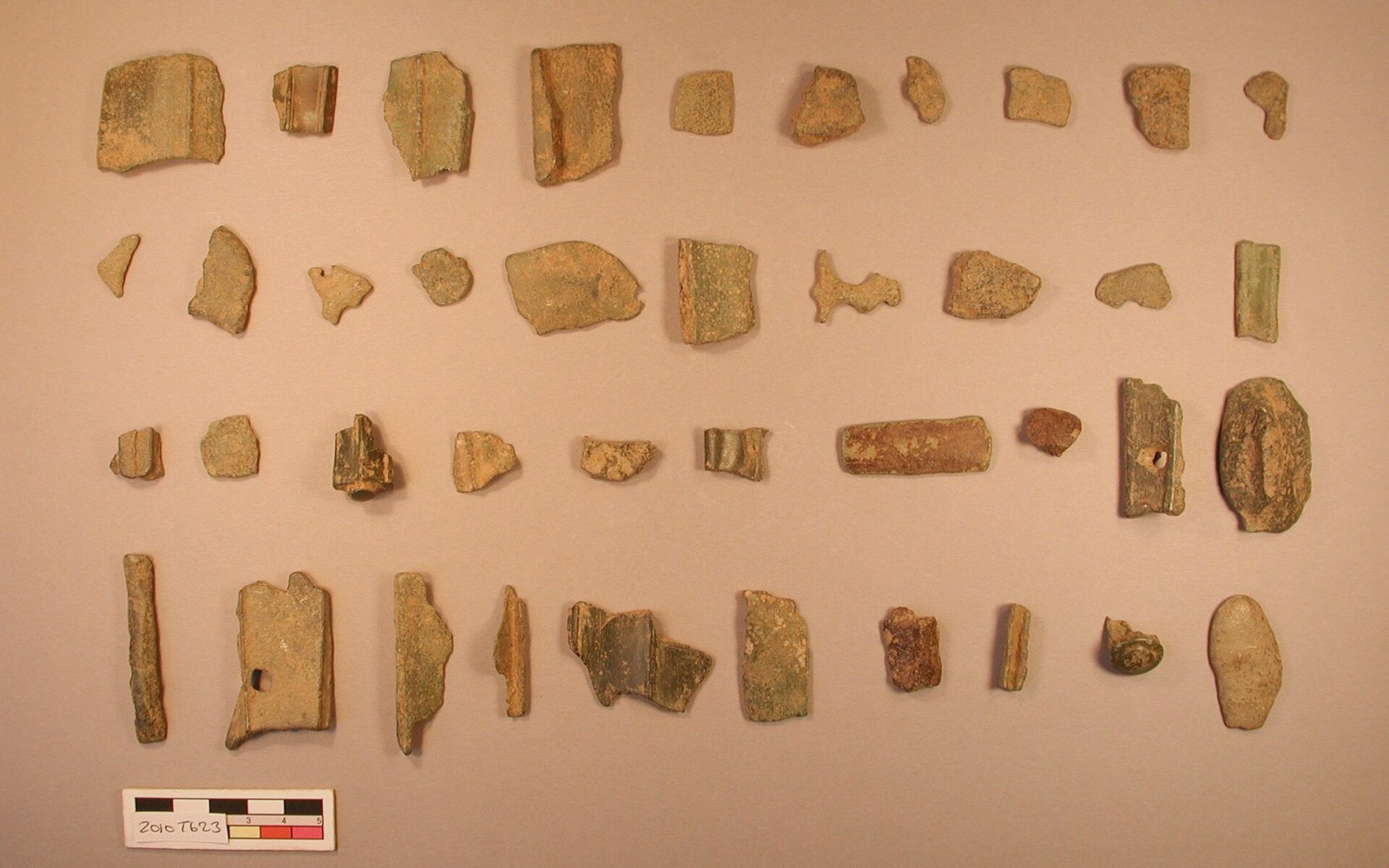
A hoard as it is usually met — laid out flat, its arrangement in the ground already lost.
Photo: Bronze Age hoard (FindID 411170) · Wikimedia CommonsThe language traps us first
A hoard implies hiding — the word carries a treasury buried against return, a cache someone meant to reclaim. That assumption has haunted Bronze Age interpretation for generations and is, in many cases, almost certainly wrong.
Three deposit types
| Item | What the record says |
|---|---|
| Scrap/founder's hoard | broken metal and ingot fragments, likely raw stock for recasting |
| Prestige deposit | high-quality swords or ornaments placed in wet or liminal ground |
| Permanent votive deposit | deliberate removal from circulation; destruction of the object confirms the intent |
The objects are real enough. Axes grouped in a pit, swords bent double and pushed into river mud, a set of socketed tools folded into a pot and lowered into a bog: these patterns recur across temperate Europe throughout the second and early first millennia BC. What the word hoard cannot tell us is intent. It describes recovery, not deposition.
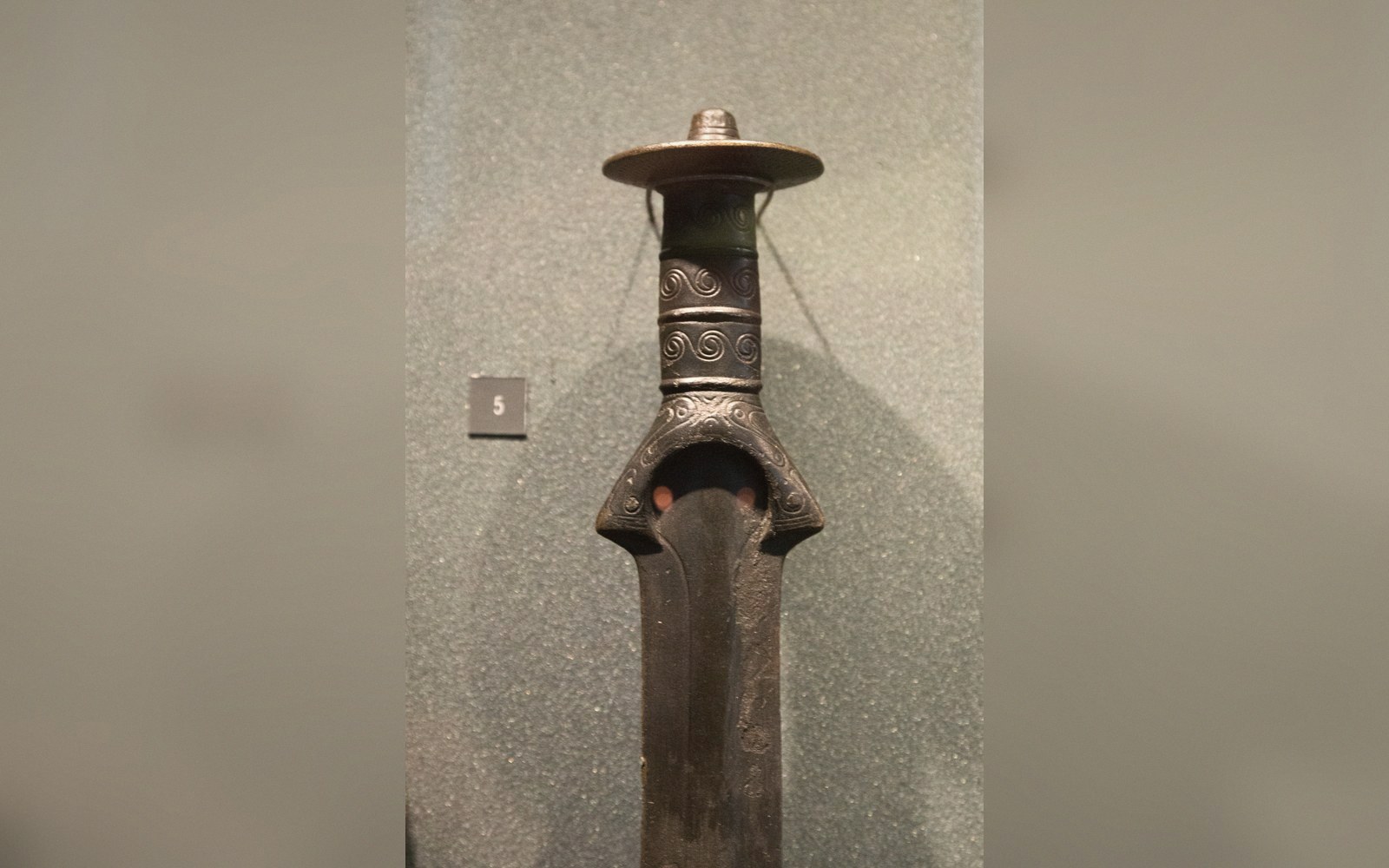
A blade on the bench before cleaning, corrosion intact. Most of what is known about typology was read off objects in this state.
Photo: Sword, Late Bronze Age, City of Prague Museum, 175563 · Wikimedia CommonsWhat the record actually shows
Three broad categories emerge when hoards are examined without assuming retrieval was ever the plan. First, the merchant or founder's scrap hoard: a mixed assemblage of broken axes, ingot fragments and unidentifiable lumps that reads as raw metal stock awaiting the next casting run. Weight correspondence between some of these assemblages and known Bronze Age weight systems strengthens the reading considerably. Second, the personal or prestige deposit — a warrior's sword, a set of ornaments, objects whose quality puts them above ordinary working life, placed deliberately in ground, river or bog. Third, and most significant for the long term, the deposit that was always meant to be permanent: metal given away, removed from circulation, perhaps as an obligation, perhaps as a statement about who controlled its supply.
Chronology
- Second and early first millennia BCthe broad period when patterned metalwork deposition is documented across temperate Europe
The breakage and bending of objects before deposition matters here. An intentionally snapped sword cannot be unsnapped and reused. The destruction is the act. Whoever bent the blade or punched a hole through the axe-blade was not hiding value; they were ending it — or converting it into a different kind of value entirely, one that operated outside exchange.
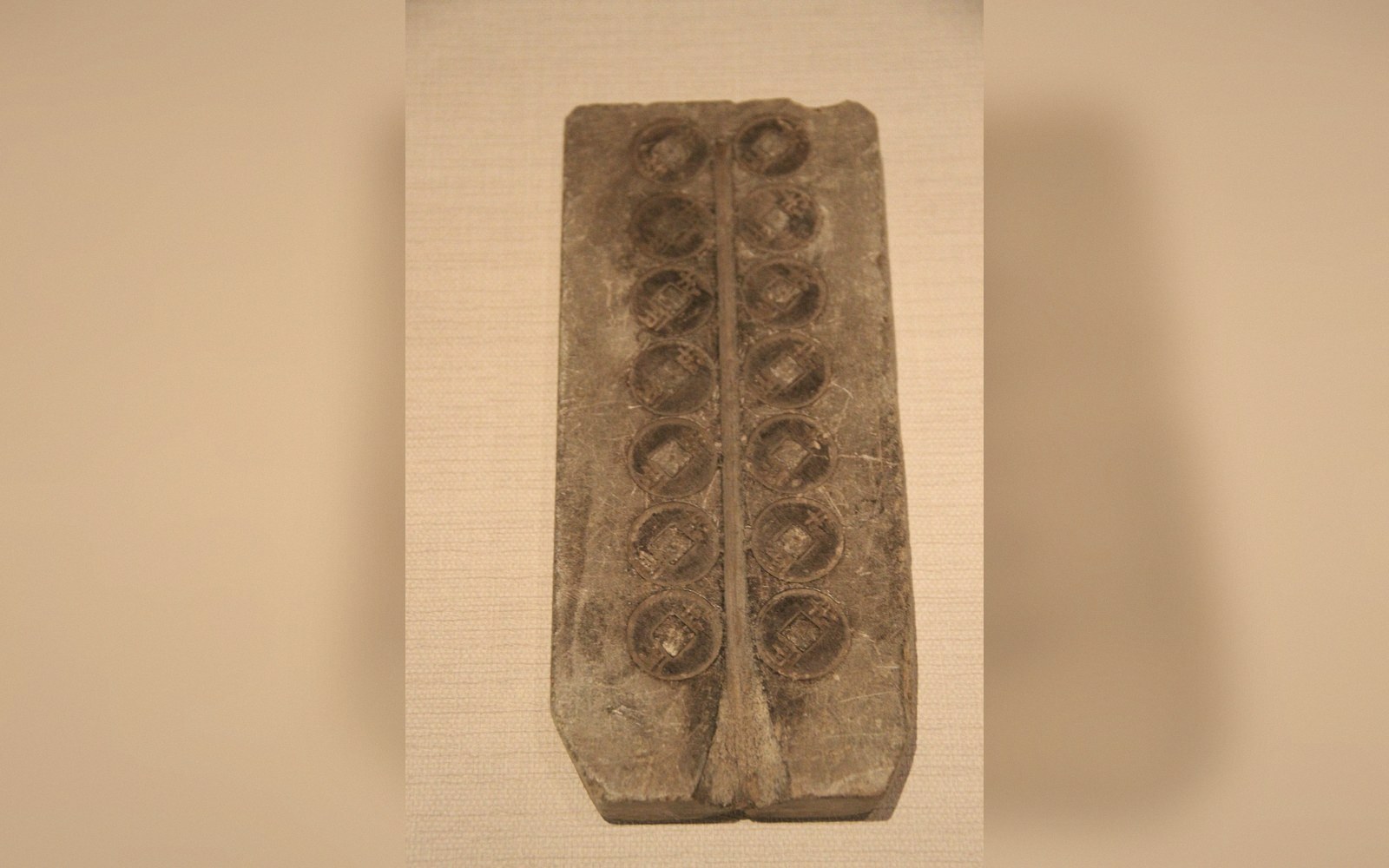
A stone mould: durable, reusable, and for that reason over-represented in the record compared with clay.
Photo: Stone Coin Mould 03 · Wikimedia CommonsRecovery tells us where, not why
The vast majority of Bronze Age metalwork now in museum collections comes from conditions — riverbanks, peat cuttings, dredging — that suggest long-term waterlogging rather than dry-ground caching. The objects survived because they were wet. Their deposition contexts point consistently toward places the living did not inhabit: water margins, bogs, boundaries. These are not convenient hiding places. They are somewhere else entirely.