Reading a worked end
Tool facets on a waterlogged post identify the axe and sometimes the hand.
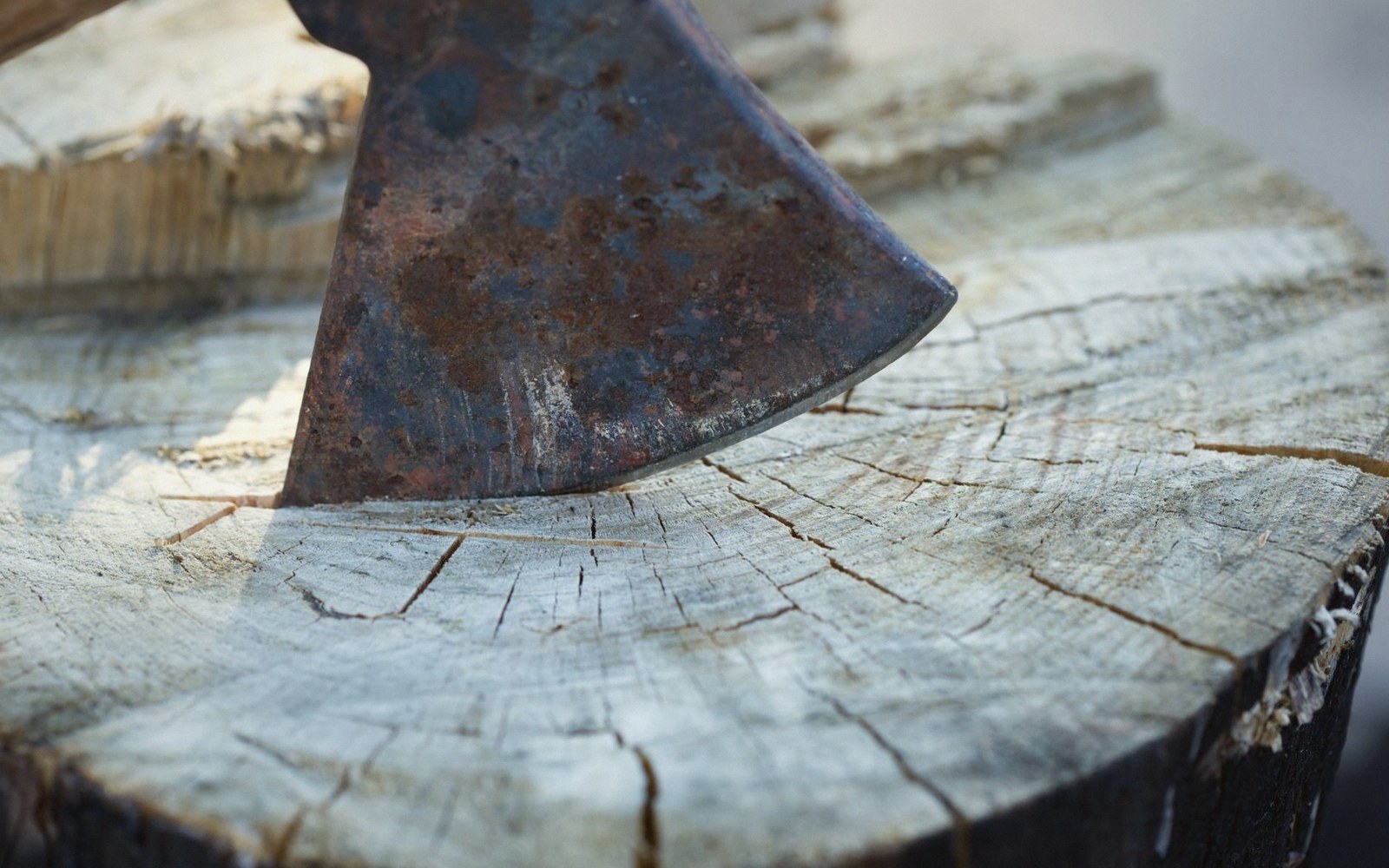
Axe facets on a waterlogged surface. Their width and angle identify the blade that cut them.
Photo: César Guillotel / PexelsThe axe marks archaeology didn't know it was keeping
A Bronze Age timber post is not merely structural evidence. Its worked end — the sharpened point driven into the peat — is a record of the tool that shaped it and, occasionally, of the hand that held it.
A narrow palstave leaves a different signature from a wide-bladed flat axe, and a socketed axe with a splayed cutting edge leaves a different signature again.
When a post is lifted from waterlogged ground and the sediment cleared, the cut facets at the tip are often intact to a resolution that dry-ground archaeology never achieves. Each blow of an axe removes a sliver of wood along the grain and leaves a planar face with a slightly curved profile matching the tool's cutting edge. Measure the chord of that curve and you have the minimum width of the blade. Count the facets, note their angle and sequence, and you begin to reconstruct a sequence of strikes — the working method of a specific craftsman.
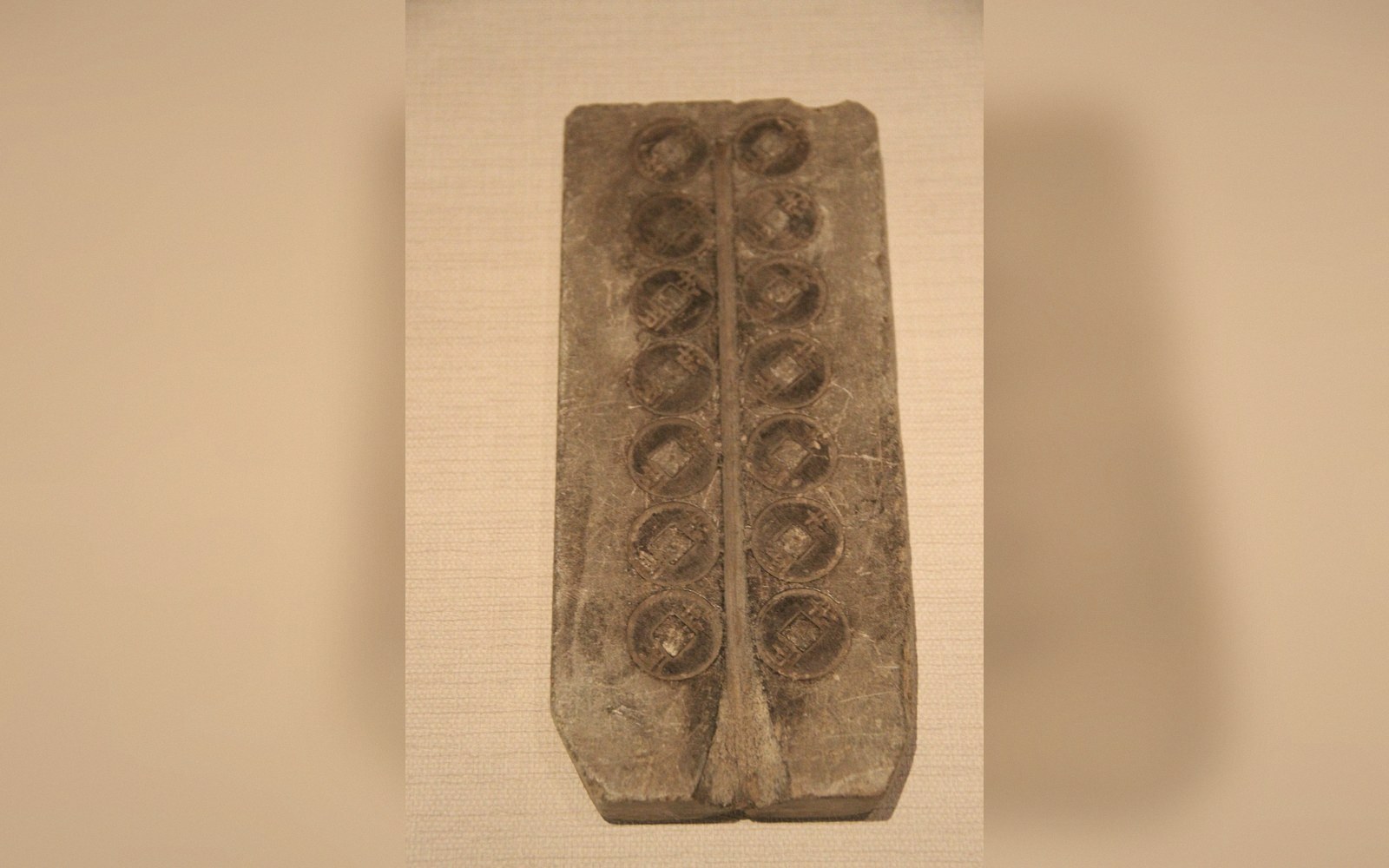
A stone mould: durable, reusable, and for that reason over-represented in the record compared with clay.
Photo: Stone Coin Mould 03 · Wikimedia CommonsBronze Age axes were not all the same. A narrow palstave leaves a different signature from a wide-bladed flat axe, and a socketed axe with a splayed cutting edge leaves a different signature again. Where multiple posts from the same structure carry matching facet geometries, the inference is strong that one tool — possibly one person — worked them all. At Flag Fen, systematic recording of worked ends across the post alignment has revealed clusters of matching facet patterns within individual rows, consistent with organised gangs working different sections simultaneously.
Chronology of inference
- Facet chord → minimum blade width (direct measurement)
- Facet angle and sequence → working method (interpretation)
- Repeated edge damage → same tool, multiple posts (strong inference)
- Facet asymmetry → handedness of worker (possible inference, contested)
The angle of attack matters too. A right-handed worker habitually approaching the timber from one side generates an asymmetry in the facet pattern — the dominant-hand strokes are typically deeper and slightly longer. This is interpretation rather than certainty, and no claim of individual identity should be overstated, but the asymmetry is real and measurable.
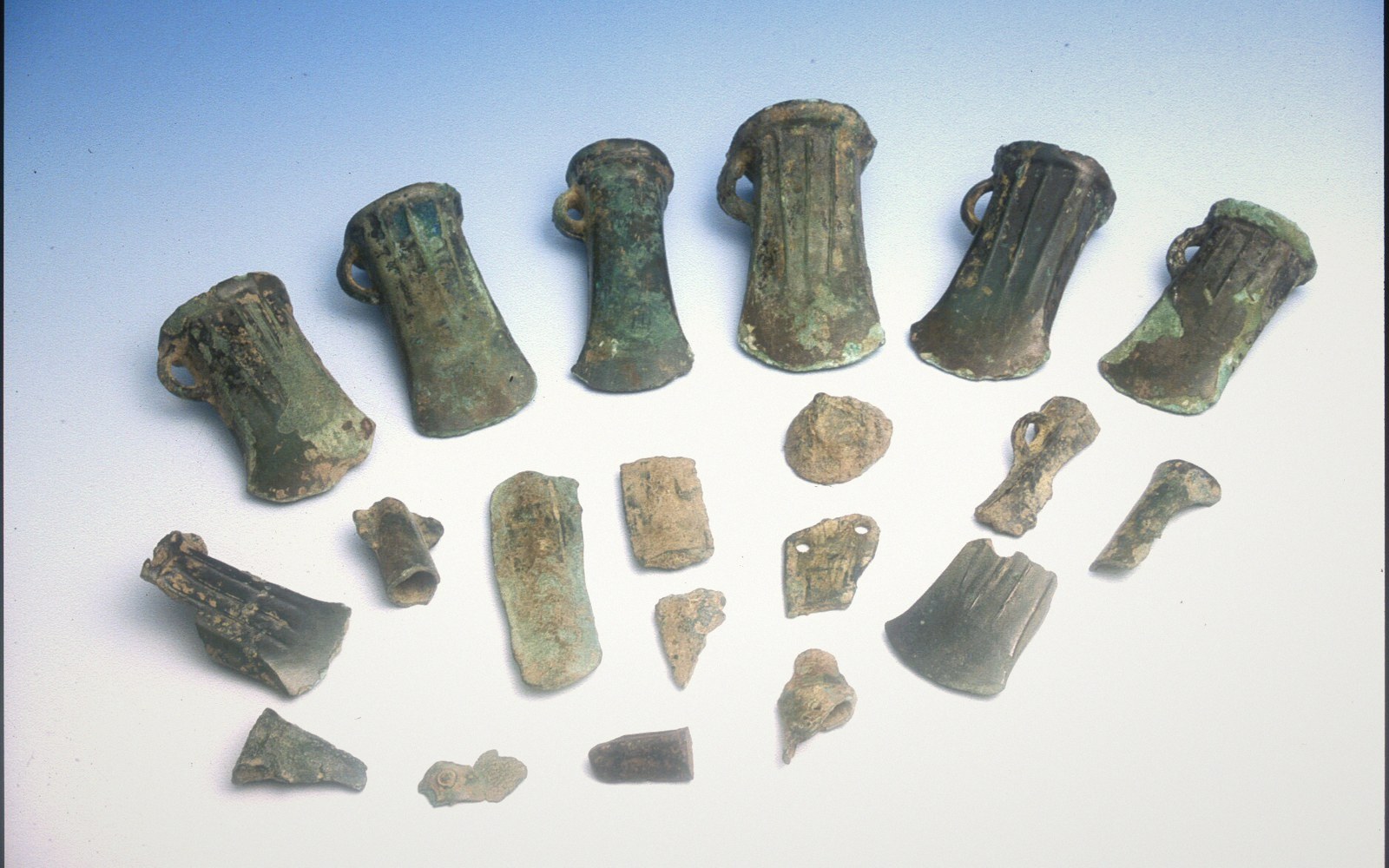
Broken bronze laid out for recording. Fragmentation is what makes a hoard readable as stock rather than as loss.
Photo: Bronze Age metalwork hoard (FindID 151245) · Wikimedia CommonsIdentification is sharpest when a tool scar preserves edge damage. A nick or slight irregularity in the axe blade reappears as a corresponding ridge on every facet cut by that blade, repeated post after post until the tool was resharpened or replaced. That repeating ridge is the closest thing Bronze Age woodworking has to a fingerprint.
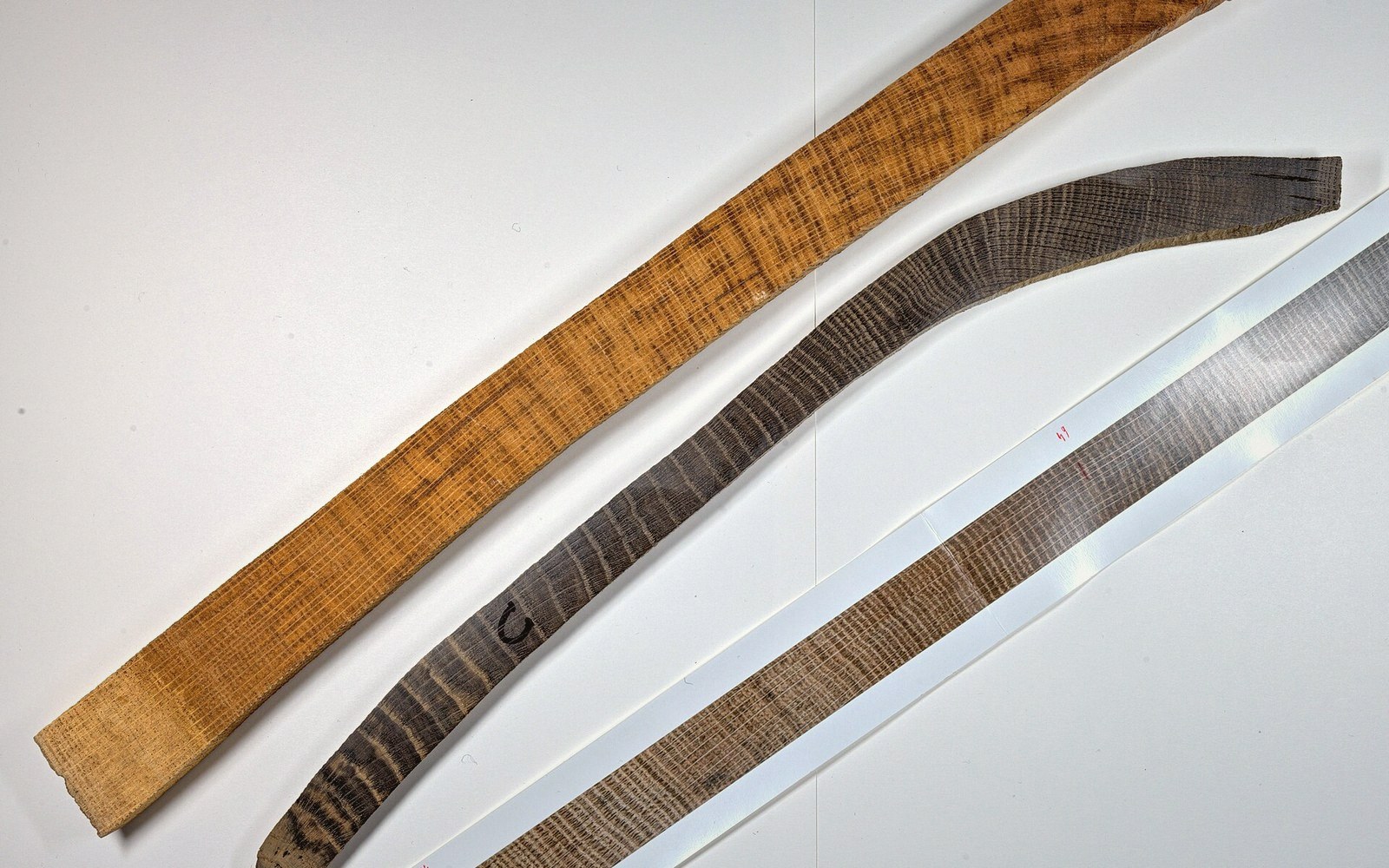 Plate iii
Ring sequences on prepared timber samples. The outermost ring can indicate the season a tree was cut.
Photo: Treering-samples hg · Wikimedia CommonsConservation is the precondition for any of this. The worked end must be kept wet from the moment of lifting; let the surface dry even briefly and the fine compression and shear detail at the cellular level that holds the facet geometry begins to collapse. The record is there. Getting it out intact requires the same care as the reading itself.