Who Controlled It
Tin bronze is rare enough to concentrate: whoever managed the supply chain held real power, and the burials make that legible.
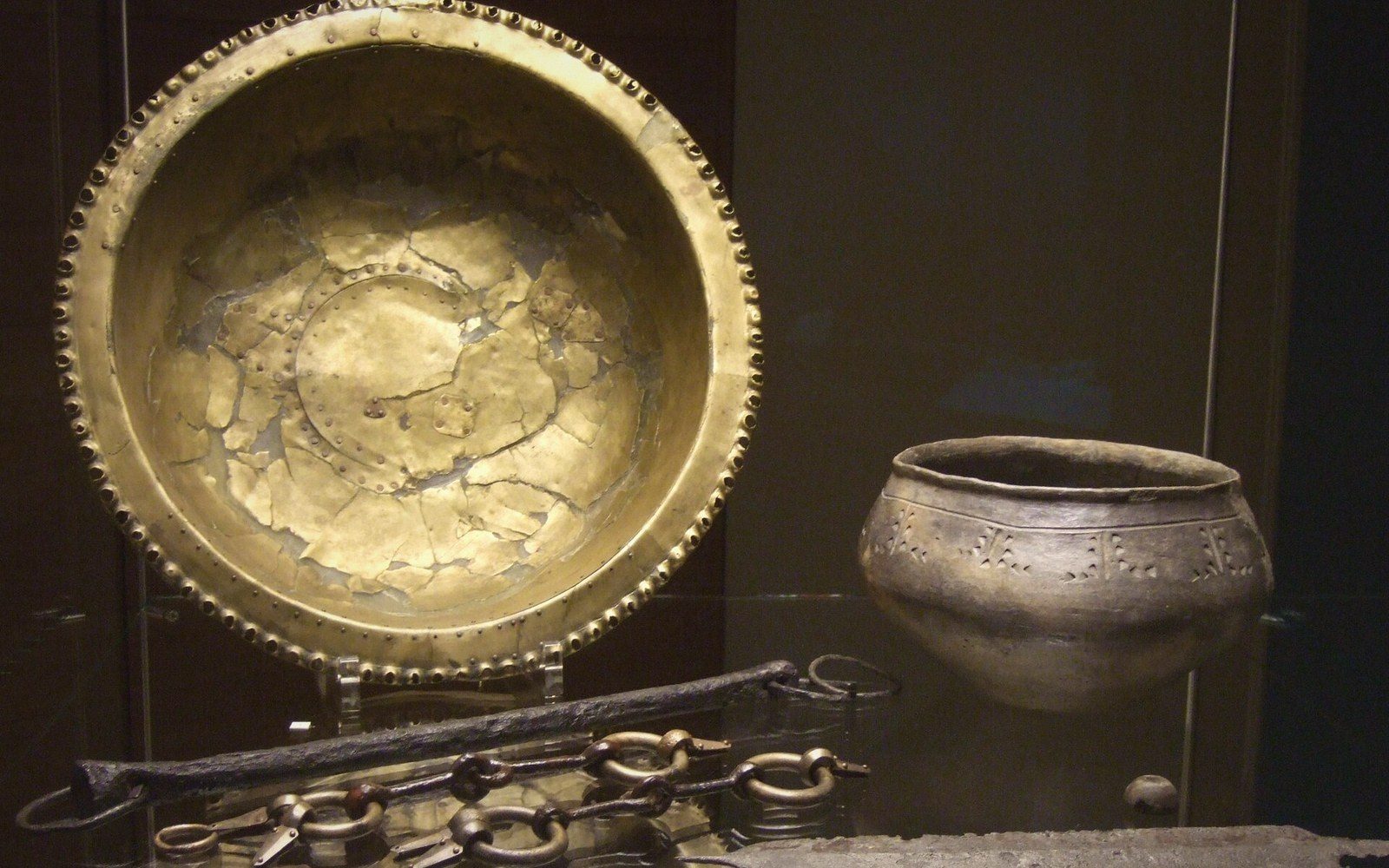
Grave goods sort the dead into ranks. What they cannot say is whether rank followed the metal or the metal followed rank.
Photo: Lombard "Princess' Grave" goods from Hauskirchen, Austria · Wikimedia CommonsThe archaeology of unequal access
Tin and its scarcity shaped every downstream relationship in the Bronze Age metal economy. Tin deposits are geographically tight — Cornwall, Brittany, Erzgebirge, a handful of other sources — while the demand for finished bronze was continental. That mismatch created leverage, and leverage created hierarchy.
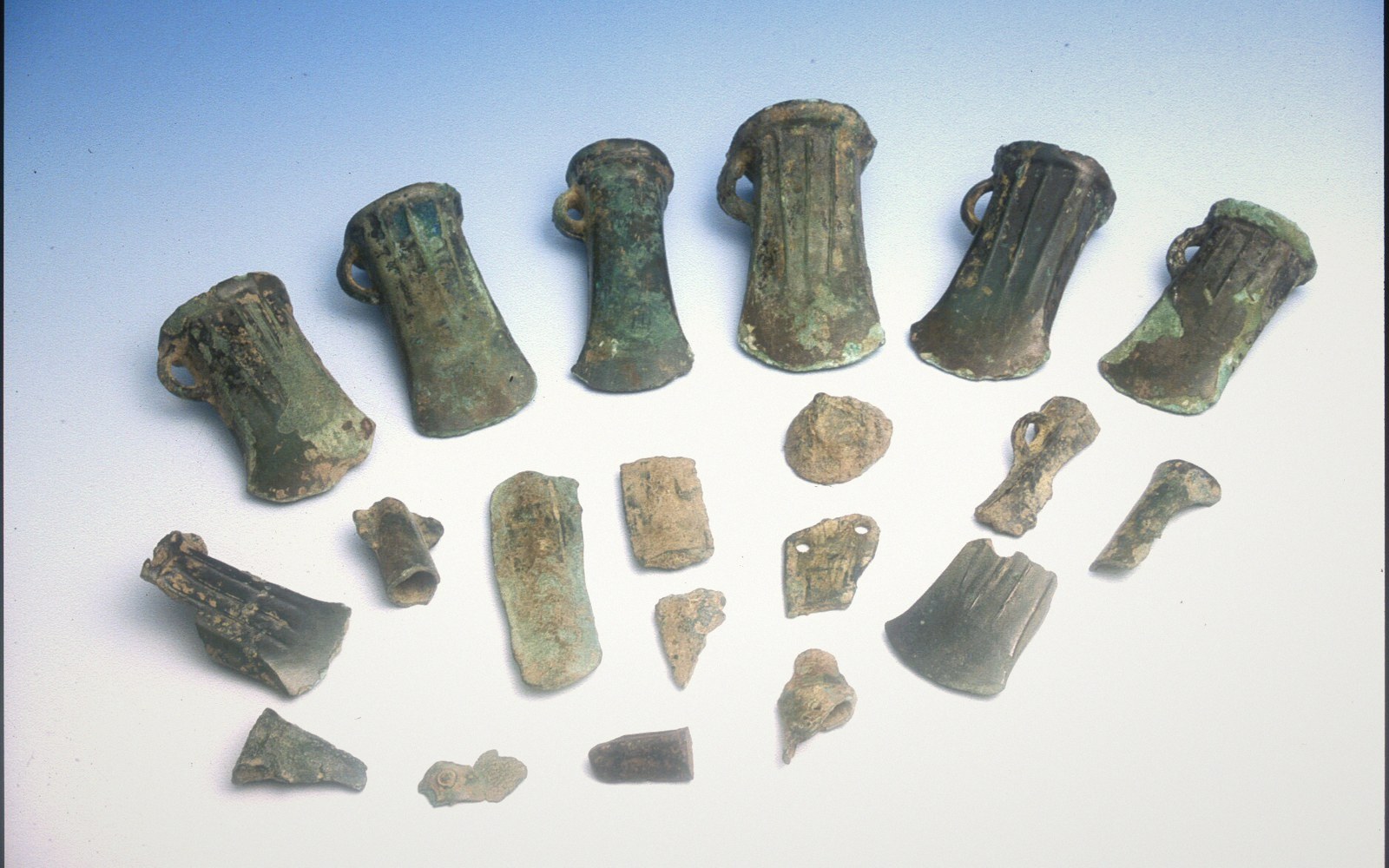
Broken bronze laid out for recording. Fragmentation is what makes a hoard readable as stock rather than as loss.
Photo: Bronze Age metalwork hoard (FindID 151245) · Wikimedia CommonsThe evidence is in the graves. Across Europe, from the Únětice Culture of central Europe in the early second millennium BC through to the Urnfield horizon, the richest burials cluster around routes between raw-material sources and productive workshops. The Leubingen barrow in Thuringia, with its bronze axes, daggers and gold ornaments, sits directly in a zone where central European amber and metal exchange routes converged. The individual buried under that enormous mound had access to materials arriving from hundreds of kilometres away — not by accident, but because someone managed that access. Whether that management was hereditary, achieved through alliance, or enforced by proximity to a ford or a pass is not something the record settles cleanly, but the differential is unmistakable.
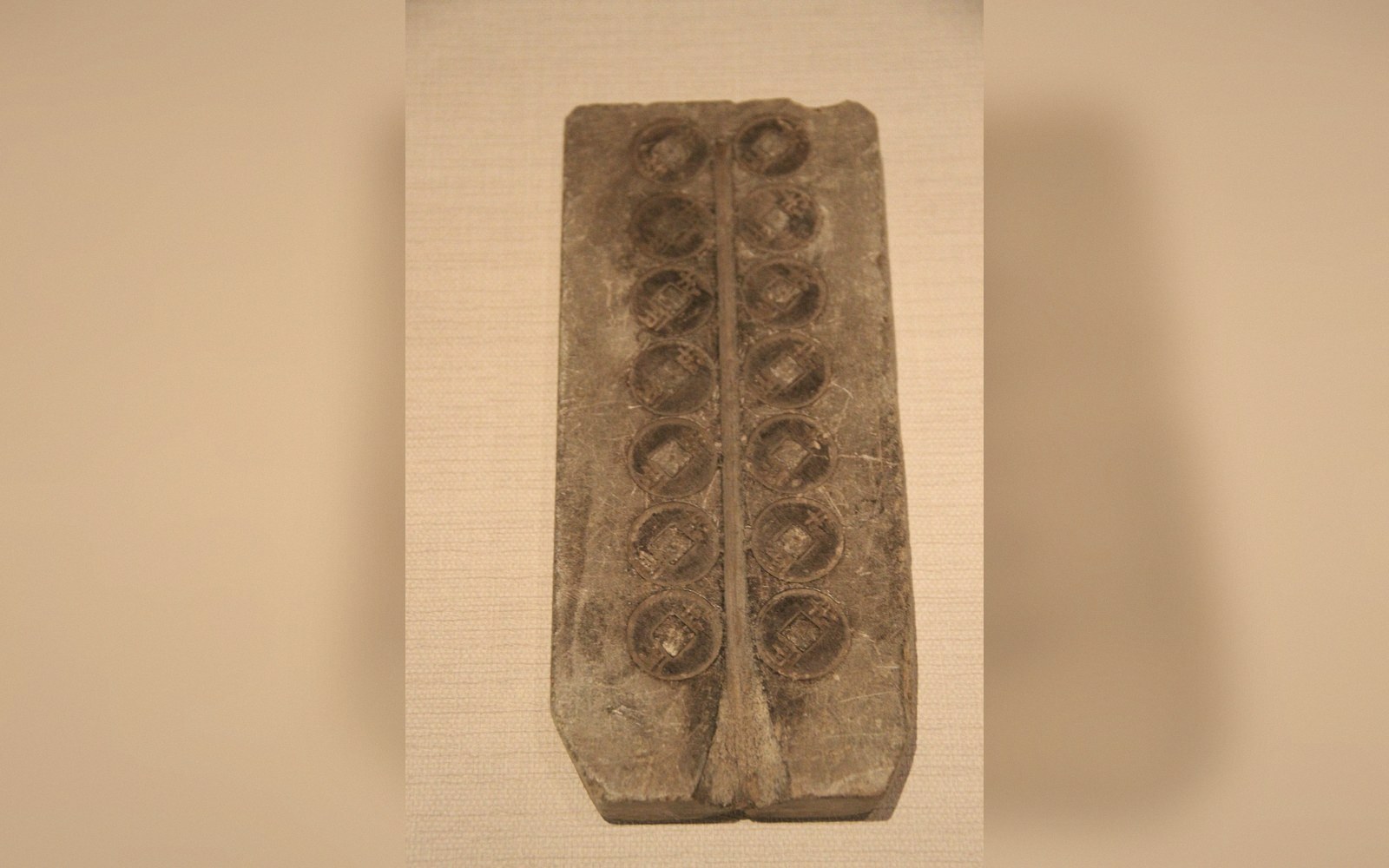
A stone mould: durable, reusable, and for that reason over-represented in the record compared with clay.
Photo: Stone Coin Mould 03 · Wikimedia CommonsBronze weapons sharpen the point. A bronze sword or a palstave axe requires consistent alloy composition — proportion and hardness varies by object type, and a sword blade is not the same problem as a socketed axe. Maintaining that consistency demands a reliable tin supply. A community or individual able to guarantee the metal for weaponry controlled the means of coercion at the same moment as controlling the symbol of status. Those two things reinforce each other in ways that stone-tool economies simply cannot replicate.
Chronology
- Únětice Cultureroughly 2300–1600 BC, central Europe; early Bronze Age florescence associated with metal accumulation in burials
- Leubingen barrowearly second millennium BC, Thuringia, Germany; one of the wealthiest early Bronze Age burials known in central Europe
- Urnfield horizonbroadly 1300–800 BC; characterised by cremation, widespread bronze circulation and long-distance exchange networks
Hoards complicate any straightforward reading of control. Deposits of finished bronze or fragmentary scrap along river corridors and at wetland margins look less like stored wealth and more like maintained relationships — offerings that acknowledged whoever (or whatever) governed a crossing, a stretch of navigable water, a productive estuary. The deposition itself was an act within a system of obligations. Remove the metal from circulation at the right place and the right moment, and the gesture stabilises, rather than disrupts, a network built on the controlled movement of a scarce alloy.