Proportion and hardness
More tin is harder and more brittle. The ratio varies by object and by workshop.
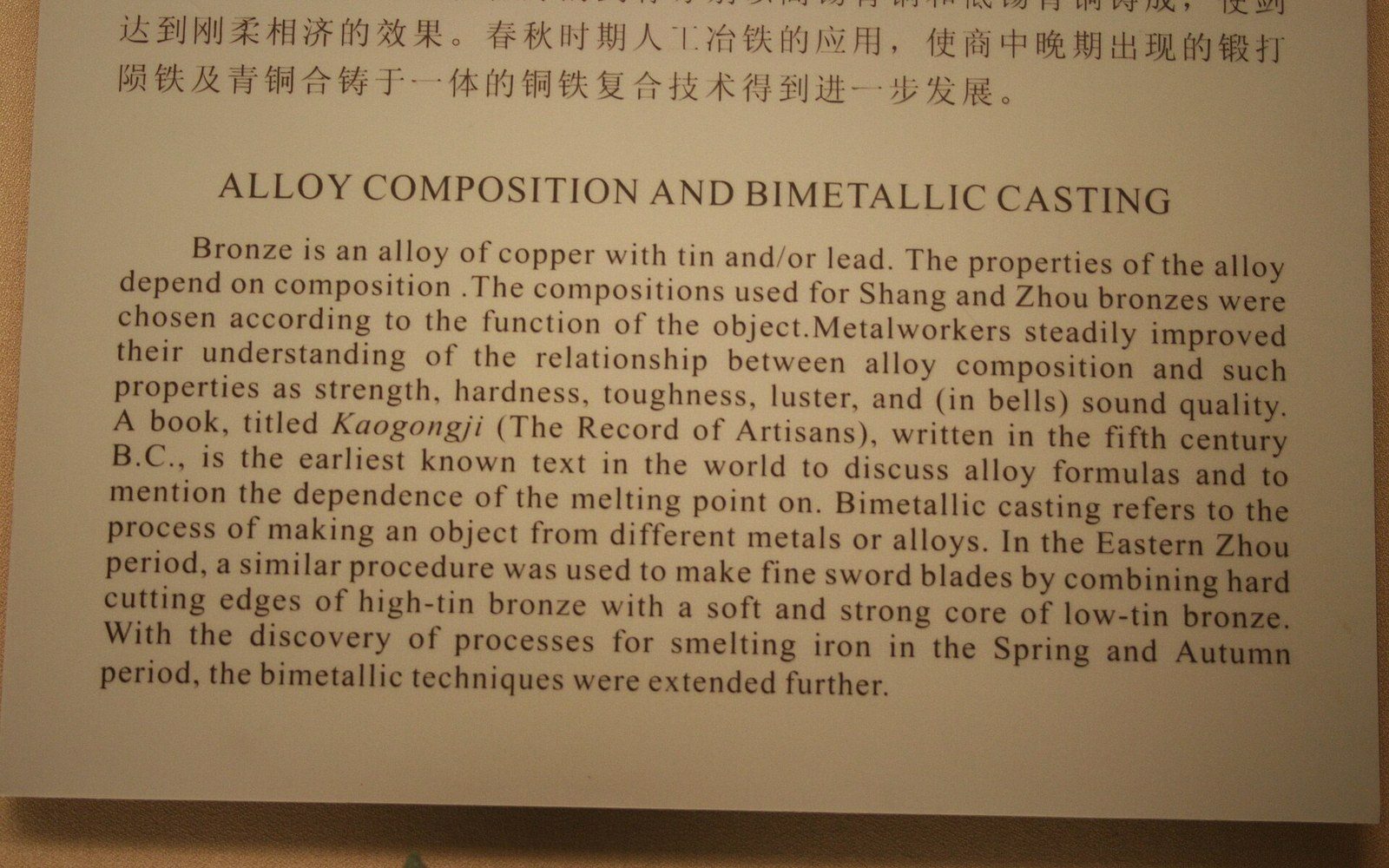
Museum text on alloy composition: the same trade-off between hardness and brittleness, recorded on the other side of the continent.
Photo: Alloy Composition and Bimetallic Casting · Wikimedia CommonsThe bronze ratio is not one thing
Bronze is not a fixed recipe. The word names a family of alloys, and the mechanical properties of any individual object depend critically on how much tin the smith added to the copper melt. That proportion was a deliberate choice — or, in some periods, a reflection of what was available — and it left a measurable signature in the metal itself.
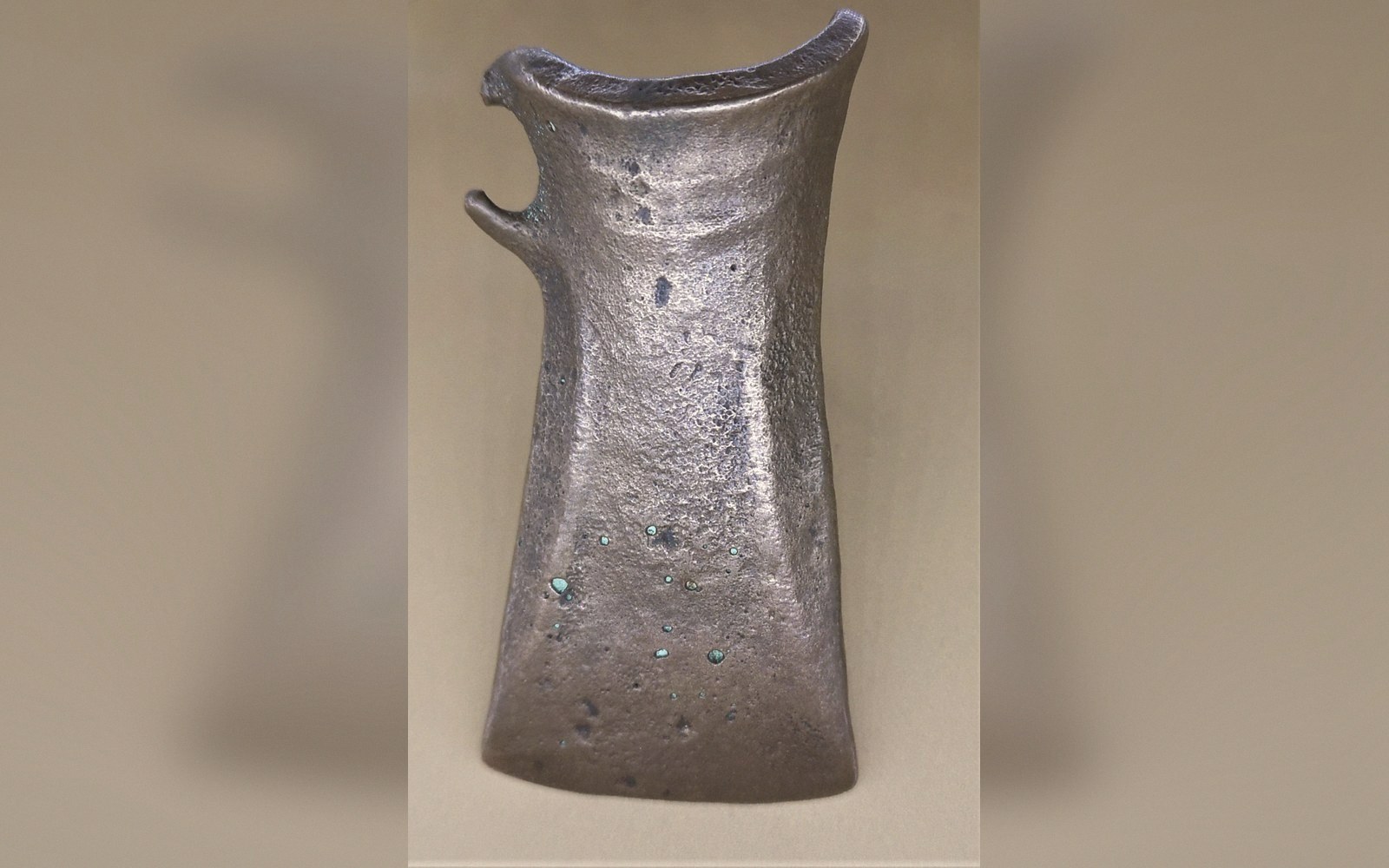 Plate iii
A socketed axe: the object type the alloy was made for, and the one that survives in the greatest numbers.
Photo: 020210904 Bronze Axe Head, Bronze Age, Lusatian culturearea in the Skawa River Basin, Andrychów · Wikimedia CommonsAt the low end, roughly 5–8% tin, bronze is relatively tough and malleable. It takes hammering without cracking, which matters for sheet-work, riveted fittings and vessels where the smith needs to work the metal after casting. Push the tin content toward 10–12% and the alloy becomes harder and stiffer, holds a cast edge better, and suits swords, rapiers and axes designed to keep that edge under use. Go higher still — 20% or above — and the metal becomes brilliant but extremely brittle, the composition characteristic of Bronze Age mirrors and certain cast rings where hardness rather than toughness is the point.
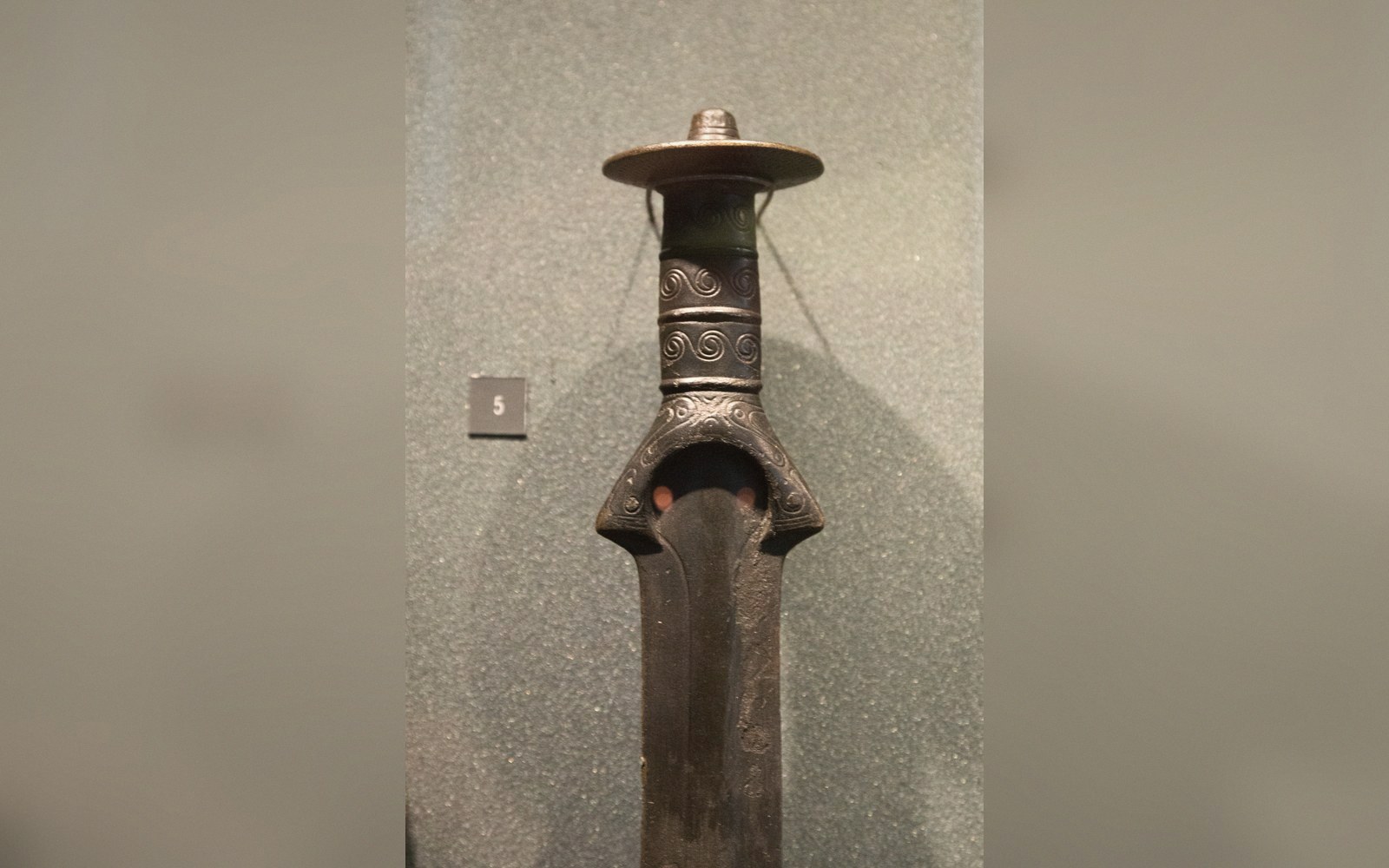
A blade on the bench before cleaning, corrosion intact. Most of what is known about typology was read off objects in this state.
Photo: Sword, Late Bronze Age, City of Prague Museum, 175563 · Wikimedia CommonsMetallurgical analysis of European Bronze Age objects shows that smiths broadly tracked these properties. Weapons and tools tend to cluster around 8–12% tin; socketed axes from the Later Bronze Age often fall near the upper end of that range. Sheet bronzes for cauldrons and buckets are leaner. This is not coincidence: the distribution reflects working knowledge of how an alloy behaves, even without a formal chemistry behind it.
Alloy composition by object type
| Item | What the record says |
|---|---|
| Low tin (5–8%) | sheet metal, vessels, riveted work; malleable, takes cold-working |
| Mid-range (8–12%) | swords, axes, most edge tools; balance of hardness and toughness |
| High tin (20%+) | mirrors, some cast rings; very hard, very brittle |
| Lead addition (1–3%) | improves mould-filling; common in Later Bronze Age castings |
What the record also shows is variation between workshops and regions. The same object type produced in two different areas can differ in tin content by several percentage points, a difference that shows up clearly in X-ray fluorescence and ICP analysis of museum collections. Whether that variation reflects deliberate compositional preference, differences in the scrap and ingot stock available, or inconsistency in smelting practice is often impossible to say for a single object. Across a statistically useful group of finds from one region, patterns do emerge.
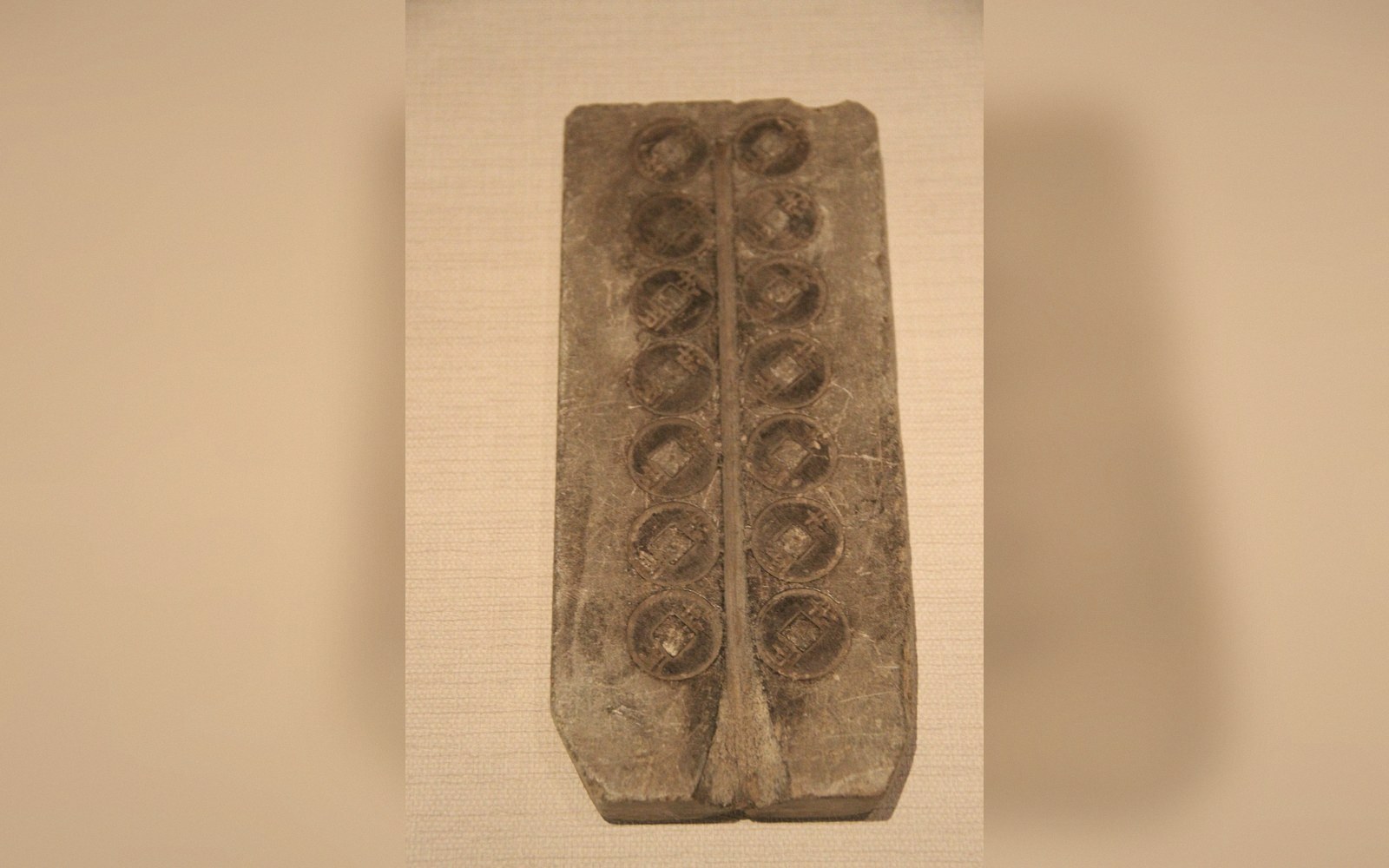
A stone mould: durable, reusable, and for that reason over-represented in the record compared with clay.
Photo: Stone Coin Mould 03 · Wikimedia CommonsLead is a further variable. Added in small quantities — a few per cent — it improves fluidity during casting and makes a mould fill cleanly, at some cost to strength. Many Later Bronze Age pieces carry a low lead signature for exactly this reason. The object the smith was making shaped the recipe, and the recipe shaped the object, in a feedback loop that analytical science is only now making legible.