Leaving it in the ground
Reburial as conservation: sometimes the best treatment is to put it back.
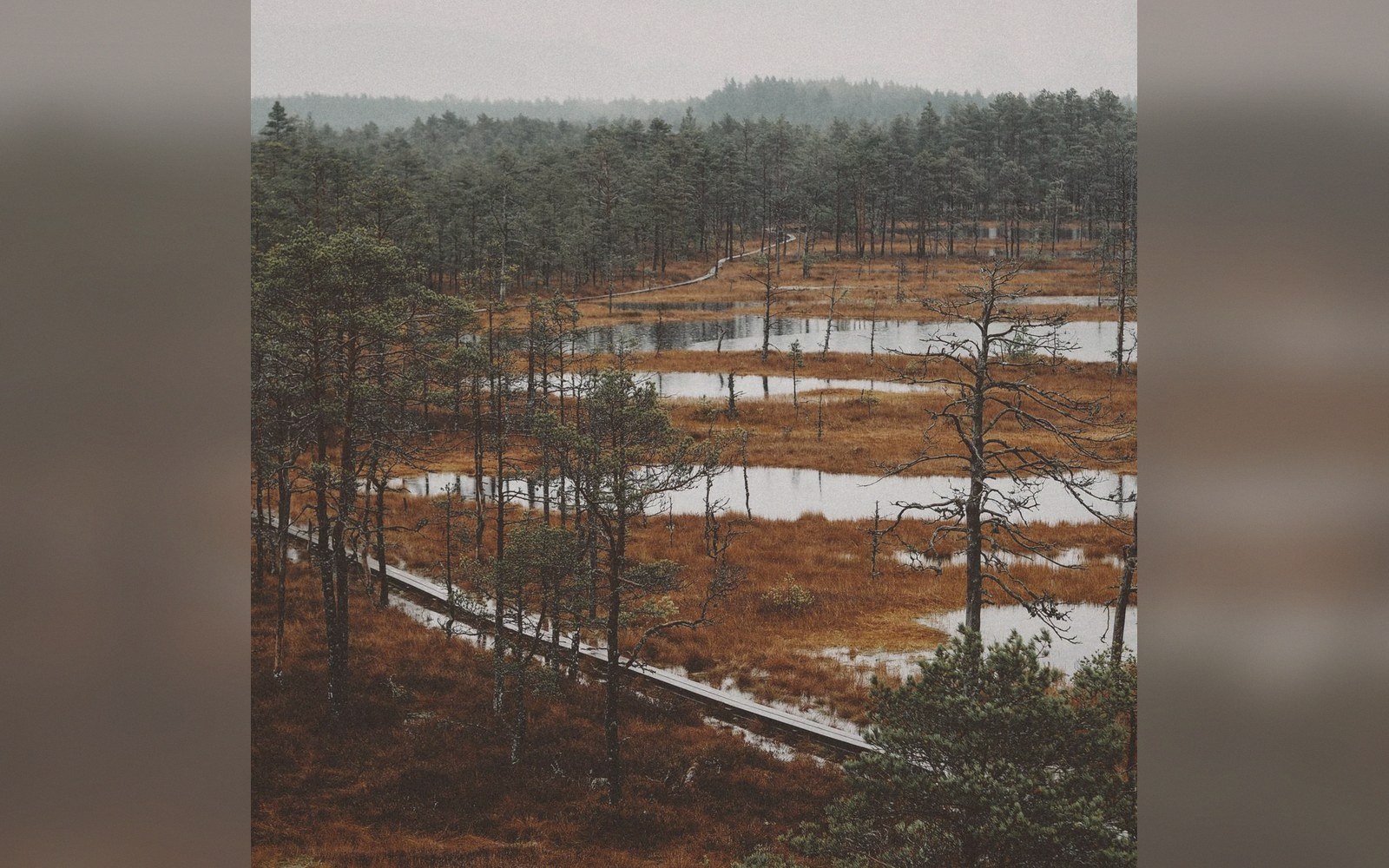
Waterlogged ground, undisturbed. The strongest argument for leaving material in place is that the ground has kept it this long.
Photo: Nikolaeva Nastia / PexelsThe logic of leaving well alone
Every time a waterlogged timber or organic object is lifted from anaerobic ground, a clock starts. The very act of excavation — exposure to oxygen, fluctuating humidity, the warmth of a summer dig — begins the deterioration that millennia of wet, airless sediment had suspended. Keeping wood wet is the first emergency after lifting; but an older discipline asks a harder question: should the object come up at all?
The practical argument reinforces the philosophical one.
The principle of in situ preservation — leaving material in the ground intentionally, rather than by default — has moved from a pragmatic fallback to a recognised conservation strategy. The reasoning is straightforward. Waterlogged peat and river silts have demonstrated, over thousands of years, that they can hold tool marks, insect remains, wood species, even bark, in a condition that no laboratory storage can replicate indefinitely. A Bronze Age post pulled and treated with polyethylene glycol will survive, but it will never again be in the condition the ground kept it.
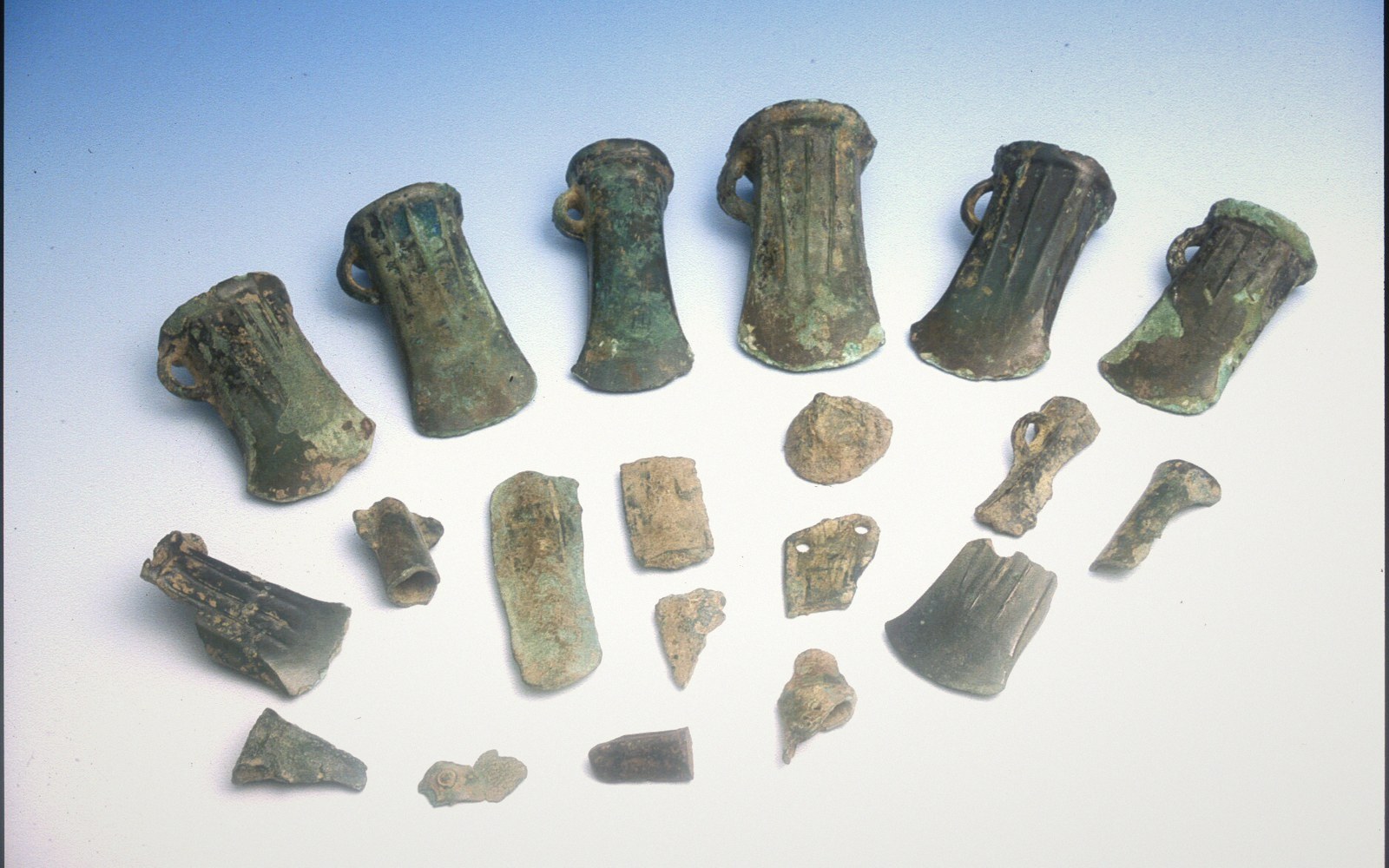
Broken bronze laid out for recording. Fragmentation is what makes a hoard readable as stock rather than as loss.
Photo: Bronze Age metalwork hoard (FindID 151245) · Wikimedia CommonsThe practical argument reinforces the philosophical one. Excavation is destructive and irreversible. Future analytical techniques — isotopic work, ancient-DNA extraction, micro-CT scanning — will extract information from an undisturbed deposit that nobody today knows how to ask for. Leaving a site intact is not inaction; it is a decision to preserve optionality for researchers who are not yet born.
The central trade-off
| Item | What the record says |
|---|---|
| In situ preservation | leaving waterlogged material undisturbed in its original ground conditions, rather than lifting it |
| Anaerobic | without oxygen; the condition that prevents microbial decay in waterlogged deposits |
| Water table monitoring | ongoing measurement of groundwater depth to detect changes that could expose buried material to oxygen |
What in situ preservation actually requires
The strategy is not passive. Ground conditions must be actively monitored. At many wetland sites across northern and western Europe, borehole transects and multi-level sensors track water table depth, pH and oxygen levels on a continuous basis. Where drainage for agriculture or urban development threatens to lower the water table — letting oxygen in and microbial decay begin — the response can include rewetting schemes, engineered clay caps, or legal protection of the hydrology as well as the archaeology itself.
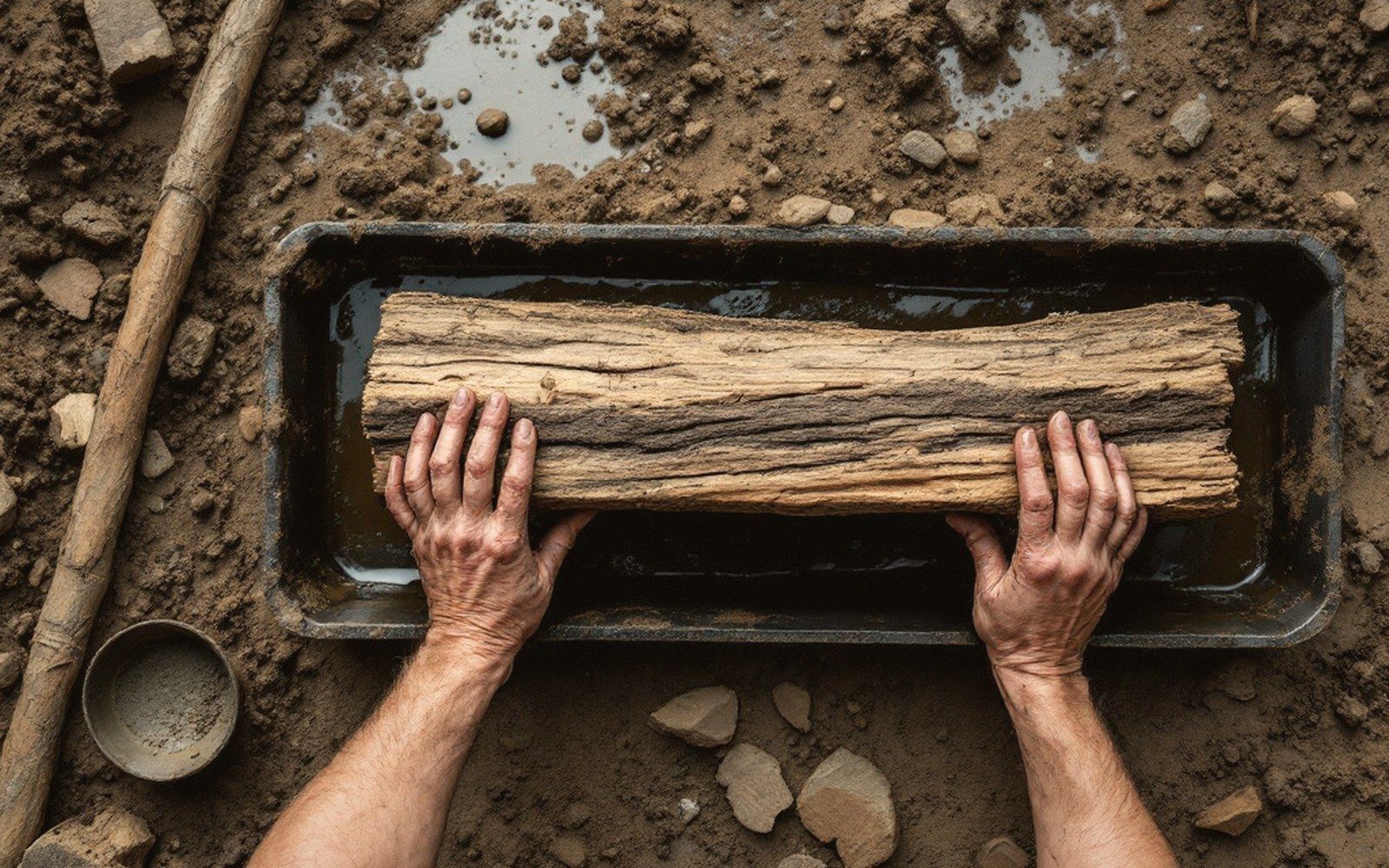
Waterlogged oak has the strength of soaked cardboard. It is lifted wet, carried wet and stored wet.
The hard cases arise when partial excavation is unavoidable: development pressure, emergency recording of an eroding edge, a research question that cannot wait. In those situations, best practice now involves excavating the minimum, sampling systematically, and backfilling any unthreatened remainder with appropriate material to restore anaerobic conditions as closely as possible.
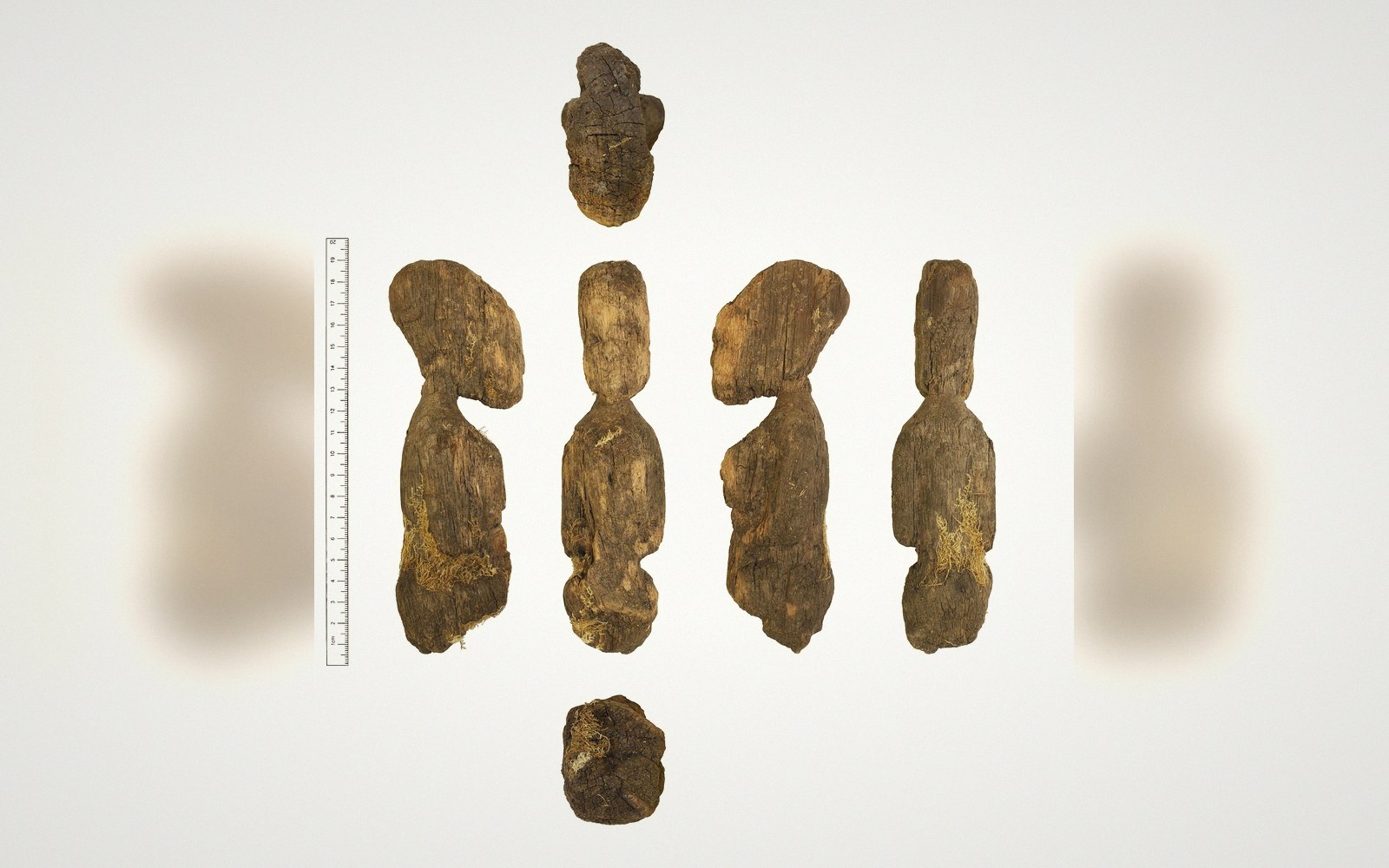 Plate iii
Wooden object after drying. Shrinkage of twenty to thirty percent in cross-section is common, and the surface detail goes with it.
Photo: Medieval Wooden Incomplete Figurine (FindID 709622) · Wikimedia CommonsThe ground, in short, is still doing its job. The conservator's task is to let it.