Weight and standard
Evidence for reckoning by weight, long before coinage.
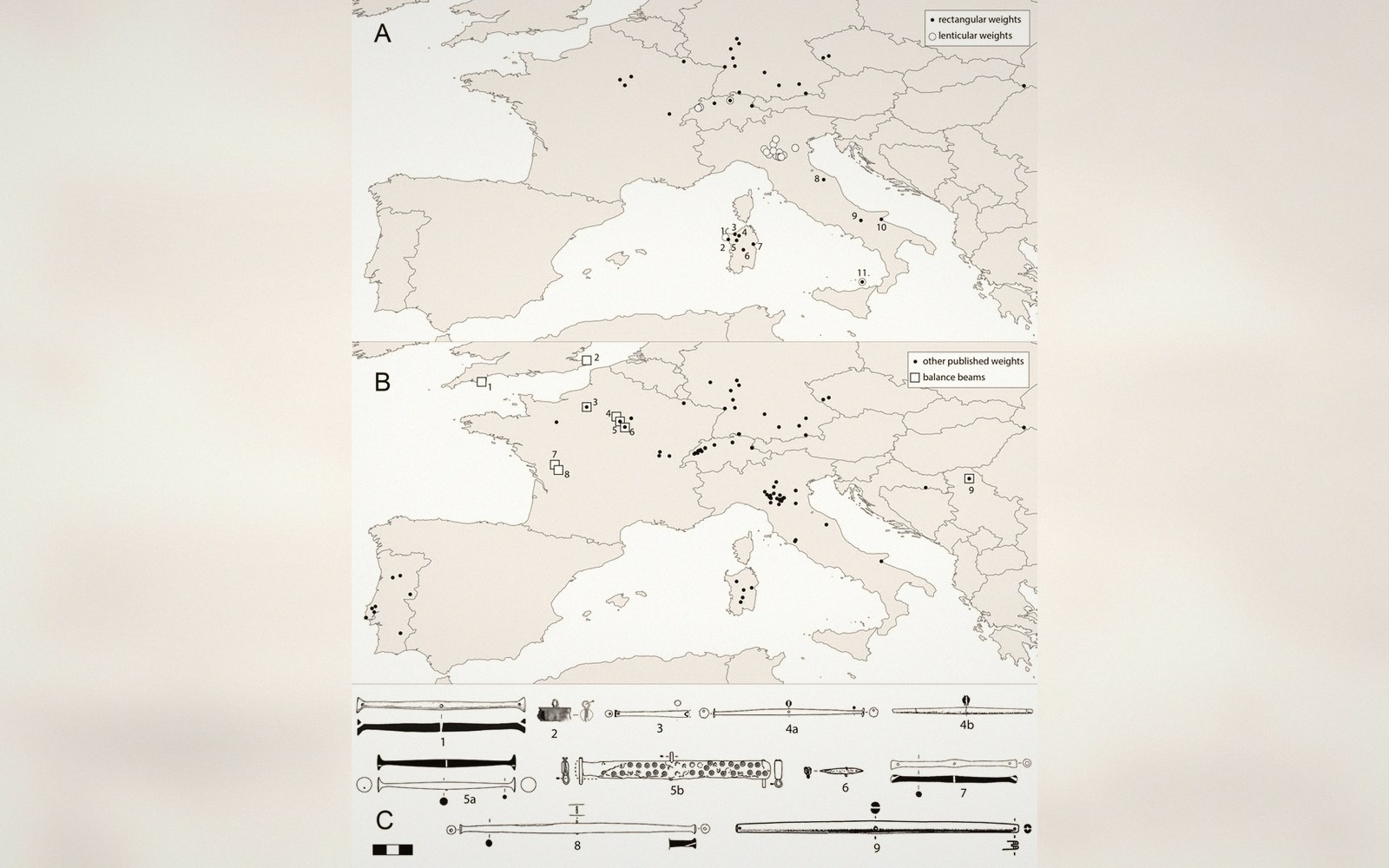
Distribution of balance beams and weights across Bronze Age Europe — the evidence that metal was reckoned by mass.
Photo: Distribution of weighing equipment in Bronze Age Europe · Wikimedia CommonsBefore the coin, the balance
Bronze Age Europe had no coinage, but it had weight. The evidence is unambiguous: balance-pan fragments and small bronze weights recovered from hoards and settlements across central Europe conform to unit systems that archaeologists can measure and compare. The weights cluster around recognisable quanta — a shekel-equivalent of roughly 9.3 grams appears repeatedly in sites stretching from the Carpathian Basin to the Atlantic fringe, suggesting shared reckoning conventions that predate any state to enforce them.
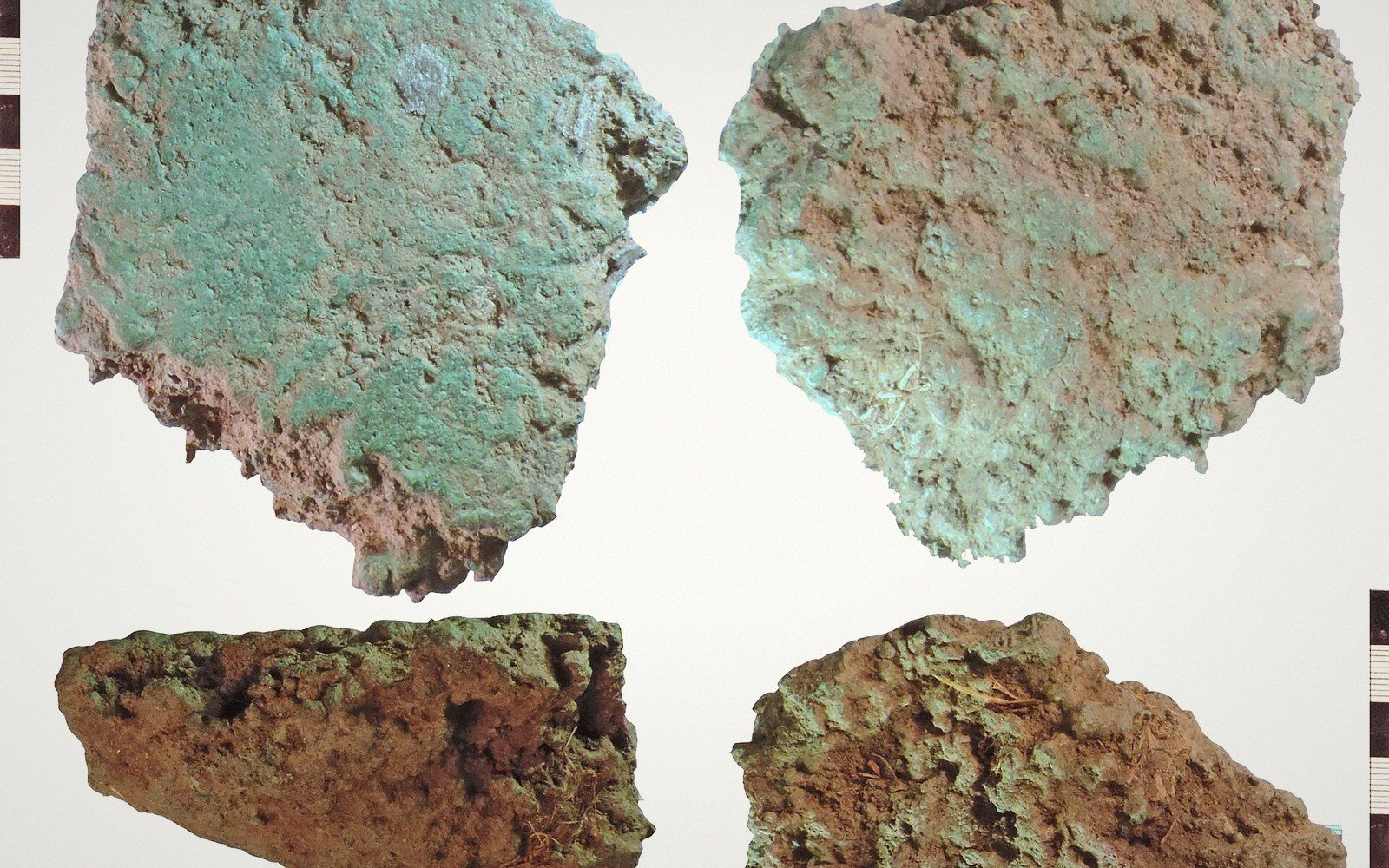 Plate iii
A copper-alloy ingot fragment. Stock circulated by weight, not as finished objects.
Photo: Undated Copper Alloy Ingot (FindID 877162) · Wikimedia CommonsThe inference is straightforward. Metal circulating as ingots and scrap has to be measured somehow. A broken sword going back into a merchant's bag is not worth a fixed, legible amount unless both parties can weigh it. The balance makes the transaction. Several Middle and Late Bronze Age hoards contain the scales themselves — folded bronze pans small enough to carry — alongside the metal they presumably measured.
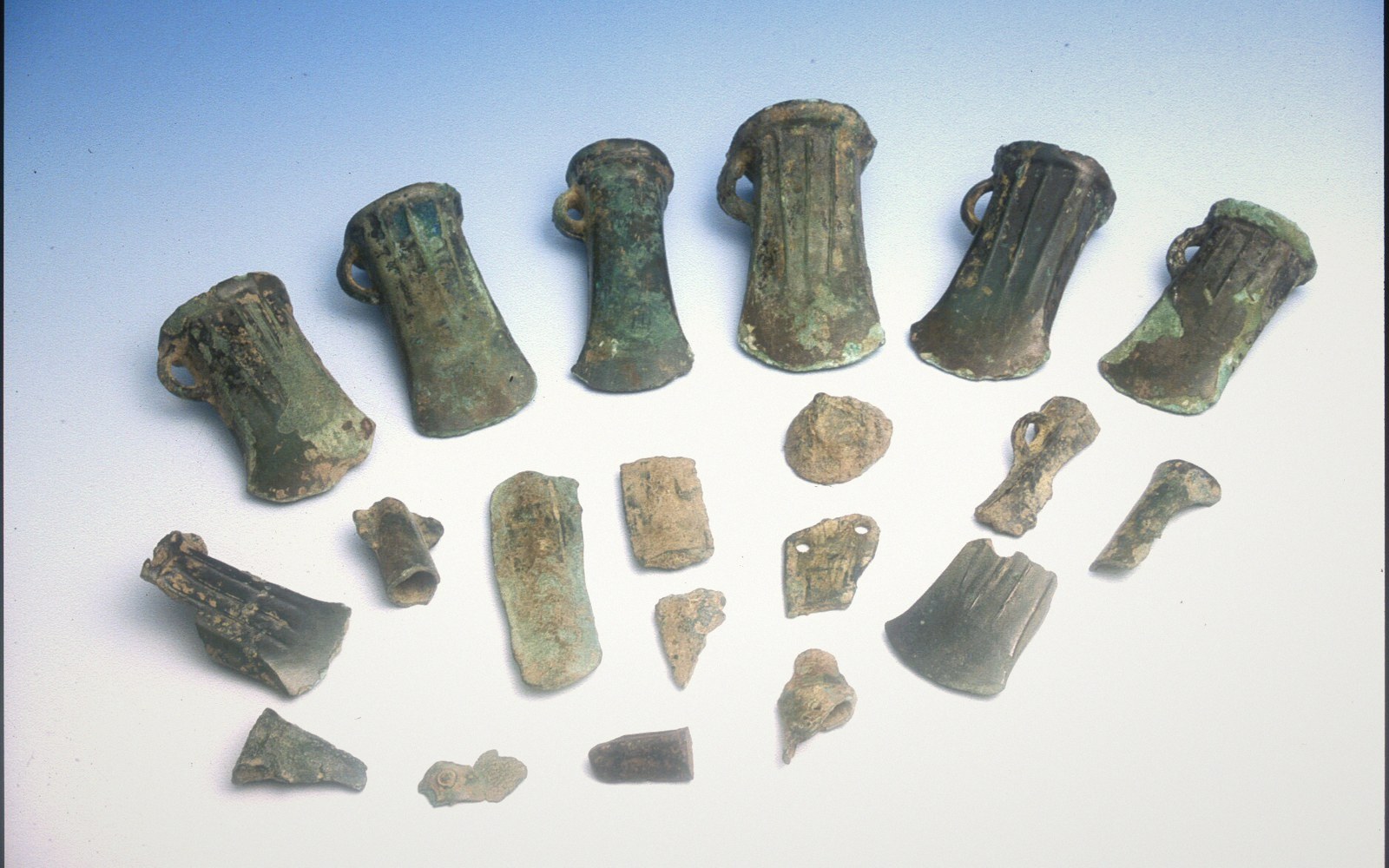
Broken bronze laid out for recording. Fragmentation is what makes a hoard readable as stock rather than as loss.
Photo: Bronze Age metalwork hoard (FindID 151245) · Wikimedia CommonsLech Weights, the disk-shaped bronze weights found in assemblages across southern Germany and the Alpine foreland, are among the best-studied examples. Excavated in quantity at sites in Bavaria and at lakeside settlements in Switzerland and northern Italy, they show a consistent internal arithmetic: individual pieces that are simple multiples or fractions of a base unit. The system is not Roman, not Greek — it predates both — but it is a system, and it implies that the people using it expected their counterparts elsewhere to recognise the same units.
Key numbers
| Item | What the record says |
|---|---|
| ~9.3 g | approximate mass of a recurring weight unit identified across European Bronze Age assemblages, often compared to a shekel equivalent |
| Multiple finds of folded bronze balance pans recovered within hoards alongside scrap metal | |
| Weight systems identified at sites in Bavaria and at lakeside settlements in Switzerland and northern Italy | |
This is not merely a European phenomenon. The weight standards documented in Bronze Age central Europe show statistical affinities with Near Eastern systems, particularly those associated with Mesopotamian and Levantine trade. Whether that reflects direct contact, shared ancestry or parallel convergence remains contested. What is not contested is that controlled weight-based exchange was operating across large distances well before literacy arrived to record it.
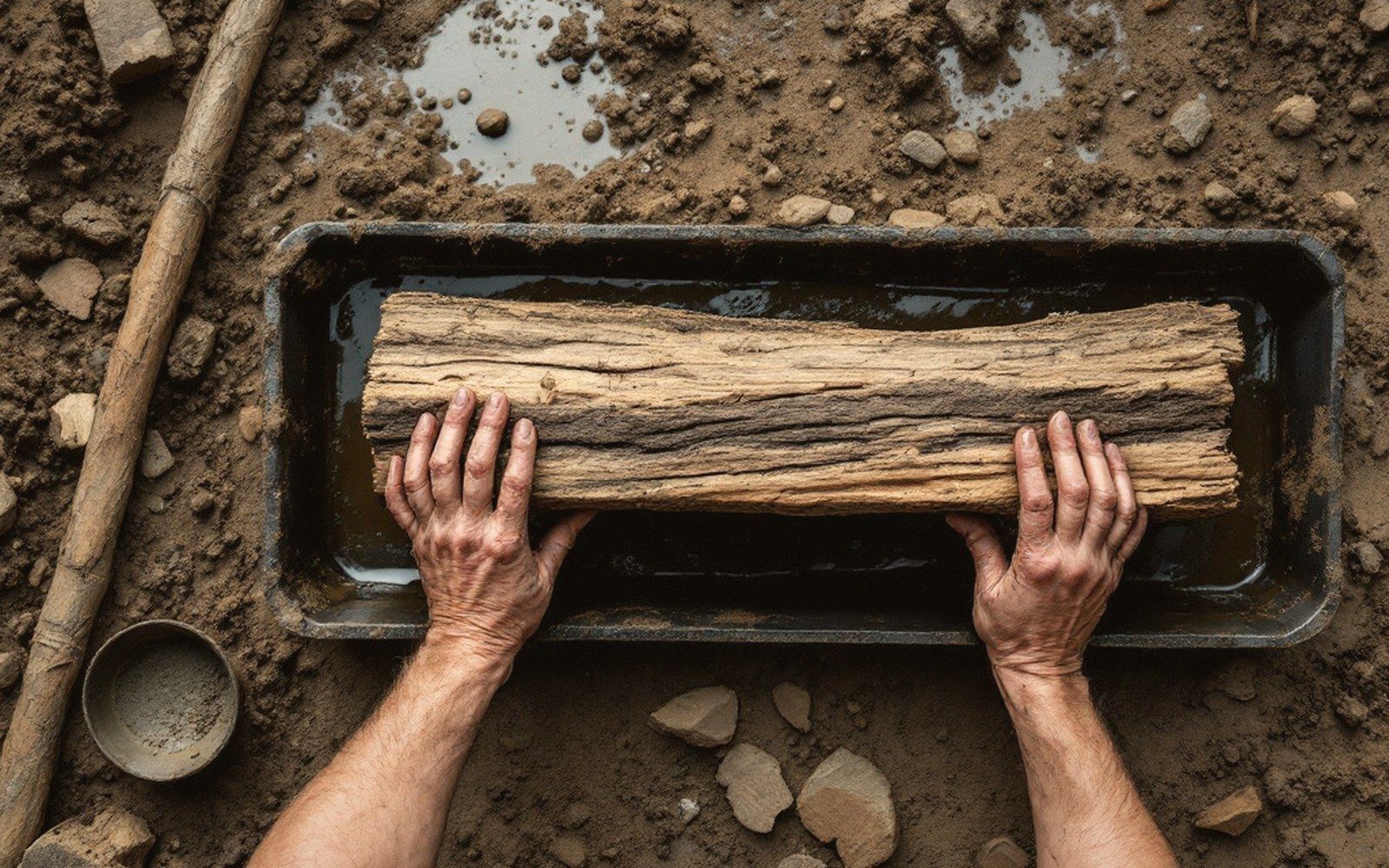
Waterlogged oak has the strength of soaked cardboard. It is lifted wet, carried wet and stored wet.
The practical implication for the metal trade is sharp: standardised weight is standardised trust. Where the routes and rivers that moved bronze can be mapped, the weights are part of what made those routes work.