Keeping Wood Wet
Lift waterlogged timber from the ground and let it dry: it will crack, warp and collapse to a fraction of its excavated size. The solution is both simple and demanding — keep it wet, and keep it wet indefinitely.
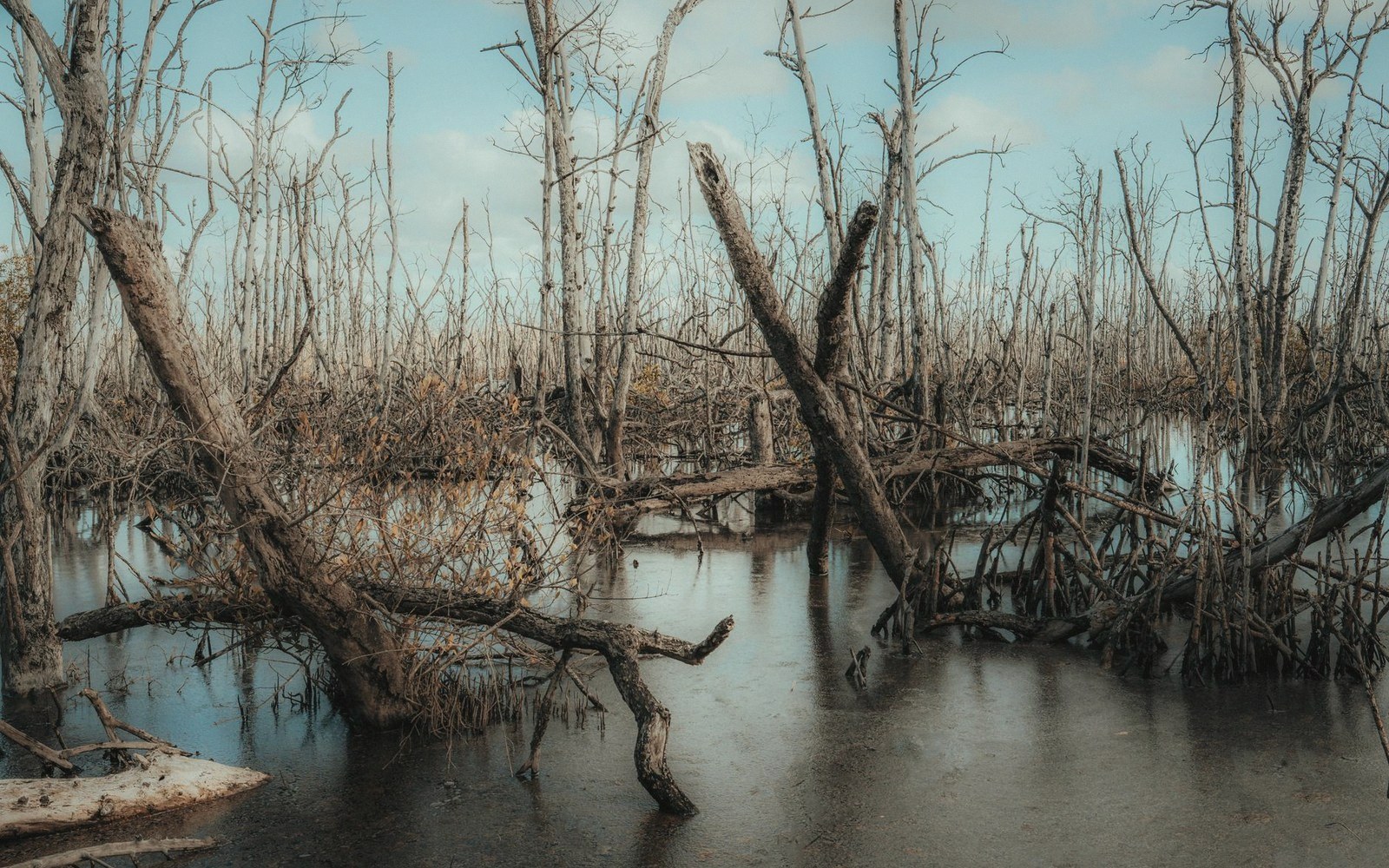
Saturated timber stays sound only while it is wet. Storage is a holding action, not a treatment.
Photo: Osmany Mederos / PexelsWhy Saturation Matters
A Bronze Age timber that has spent three thousand years in waterlogged peat is not solid wood in any conventional sense. The cellulose and hemicellulose have largely degraded; what remains is a sponge of cell walls held open by water. That water is structural. Remove it without substituting something else, and surface tension during drying tears the cell walls inward. The result is shrinkage, warping and the obliteration of every tool mark that made the object archaeologically legible. A post from the Flag Fen causeway that measures a hundred and fifty millimetres across on excavation may finish at seventy or less — and the axe facets reading a worked end depends on will be gone.
Wet storage is therefore not a transitional convenience. For many timbers it is the conservation strategy, full stop — a decision to hold the object in a known stable state until resources exist for proper treatment, or to hold it permanently if those resources never materialise.
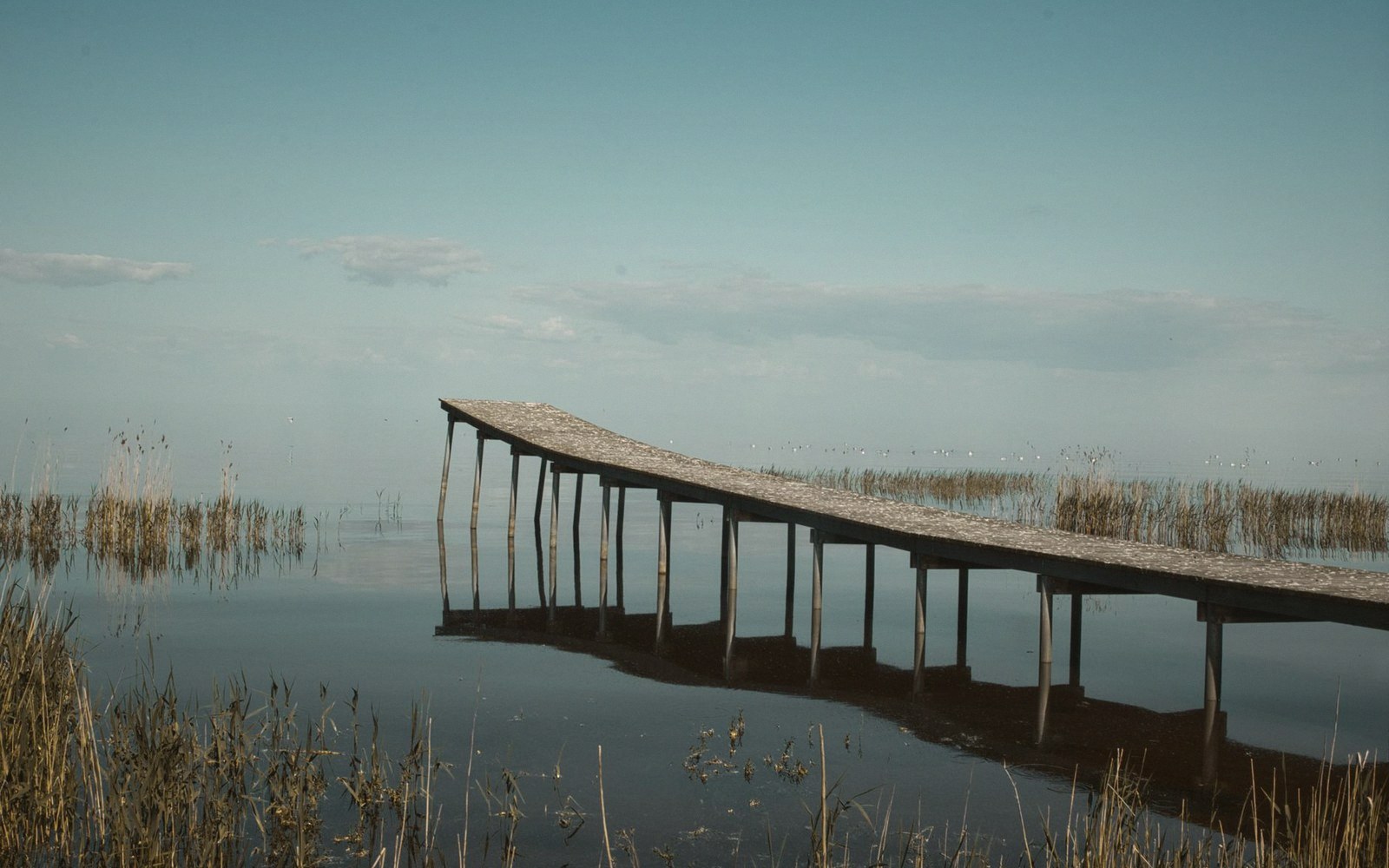
Uprights standing in standing water. Below the water table timber survives; above it, it does not.
Photo: Estonian Stalker / PexelsThe Practicalities of Keeping Things Wet
The basic requirement is straightforward: tanks or troughs filled with clean water, sized to the timbers, sealed against evaporation and monitored regularly. In practice, complications accumulate quickly.
What the wood becomes without water
| Item | What the record says |
|---|---|
| Waterlogged timber | wood saturated to the point where water is structurally integral to the cell walls |
| Shrinkage | dimensional loss during drying, often fifty percent or more in degraded wood |
| Biocide | chemical agent added to tank water to suppress bacterial and fungal growth |
| Differential shrinkage | uneven shrinkage across a cross-section, causing warping and cracking |
Water quality is the first variable. Standing water in a tank will support microbial growth, and bacteria and fungi will continue the degradation that anaerobic burial had halted. Biocides are routinely added — quaternary ammonium compounds and low concentrations of fungicide are common choices — but formulations need regular review as both the microbial communities and regulatory frameworks around the compounds change. Algal growth clouds the water, reduces visual monitoring and can physically colonise wood surfaces; ultraviolet filtration or partial shading of the tank reduces it.
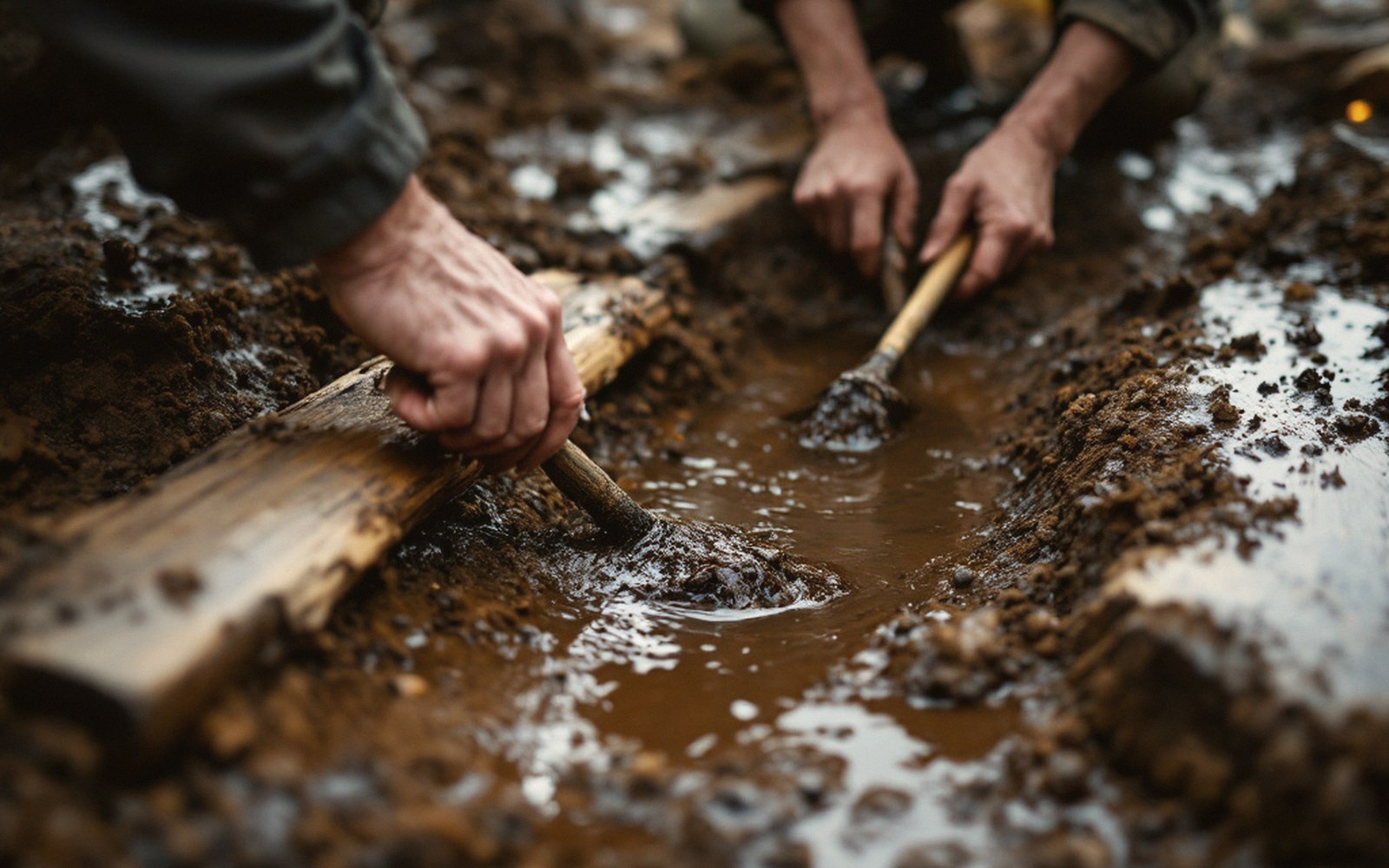
A trench in wet ground is pumped for as long as it stays open. The water that preserved everything also makes it hard to see.
Temperature matters. Warmer water accelerates microbial activity; cooler water slows it but increases the risk of freeze damage to already-fragile cell walls if storage is external. Many facilities aim for a cool, stable temperature rather than a specific figure, and insulate tanks accordingly.
The timbers themselves must be fully submerged. Objects that break the surface are subject to fluctuating moisture at the interface — precisely the condition that causes preferential cracking and differential shrinkage. Weighted grids or loose netting hold pieces below the waterline without applying localised pressure to fragile surfaces. Large assemblages need careful arrangement so that individual pieces can be accessed and inspected without disturbing the rest.
Key conditions to maintain
| Item | What the record says |
|---|---|
| Water quality | biocide levels, algal control, microbial monitoring |
| Temperature | cool and stable; extremes accelerate decay or risk freeze damage |
| Submersion | timbers must remain fully below the waterline at all times |
| Monitoring frequency | documented, scheduled checks; unobserved drying is irreversible loss |
Monitoring is non-negotiable. Water levels drop through evaporation and minor leaks; biocide concentrations drift; tanks crack. A piece of wood that dries unobserved over a weekend in a failed tank is a piece of wood that cannot be recovered. Institutions holding significant waterlogged assemblages typically assign routine tank checks to staff on a documented schedule, with records that track water level, clarity, odour and any visible change to the wood.
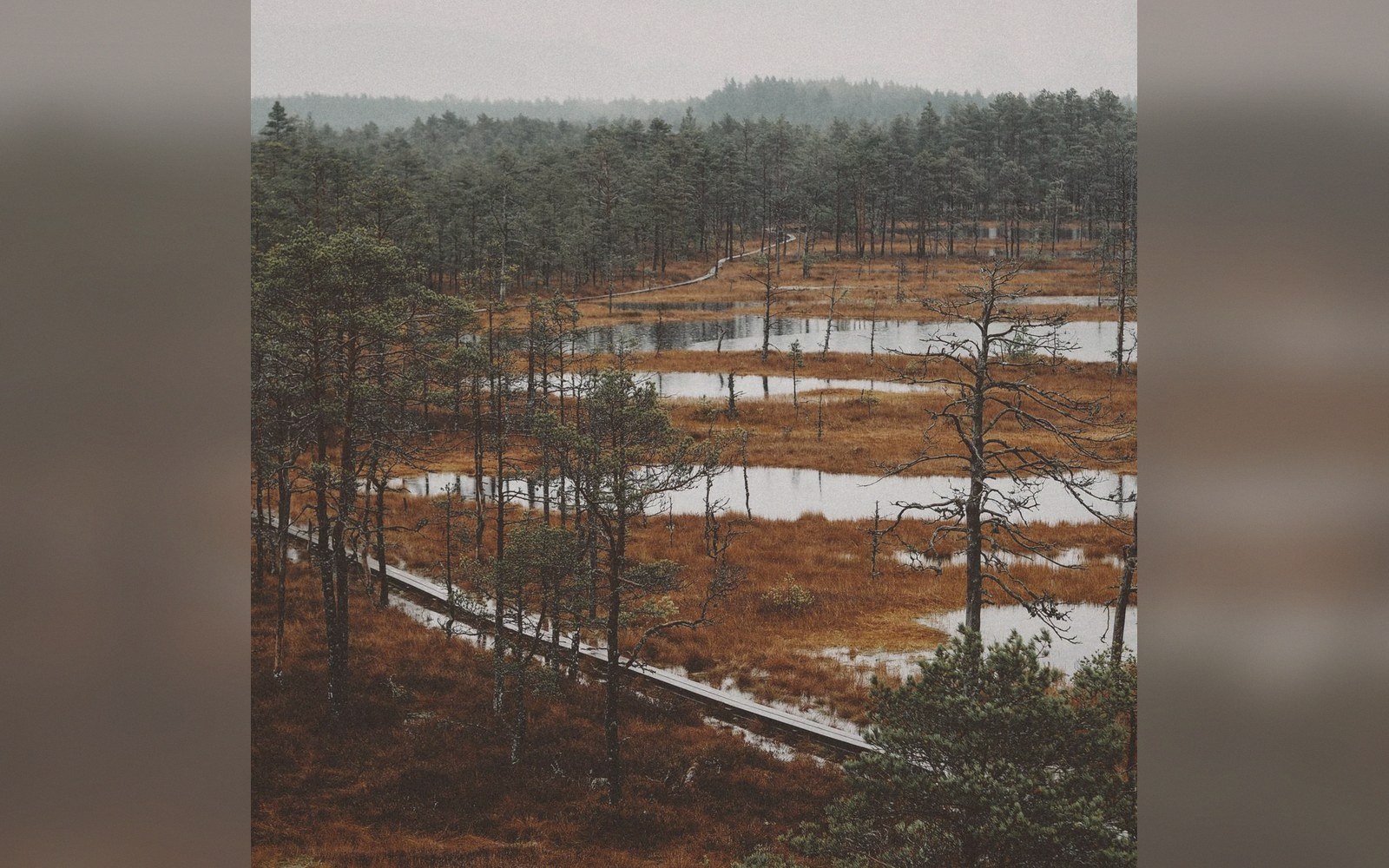 Plate iii
Waterlogged ground, undisturbed. The strongest argument for leaving material in place is that the ground has kept it this long.
Photo: Nikolaeva Nastia / PexelsThe Real Cost
The hidden burden of wet storage is time and space. A tank of Bronze Age timbers requires the same attention in year thirty as it did in year one. Storage facilities must be maintained, heated or cooled, kept secure and staffed with people who understand what they are looking at. For the largest excavated assemblages — many hundreds of posts and planks — the infrastructure is substantial and the commitment is open-ended.
The basic requirement is straightforward: tanks or troughs filled with clean water, sized to the timbers, sealed against evaporation and monitored regularly.
This is why in-situ preservation is increasingly the preferred answer where the ground is still intact. The peat and waterlogged soil that kept a timber for three millennia will keep it longer still, at effectively zero maintenance cost, for future excavators with techniques not yet available. Lifting a waterlogged timber creates an obligation that lasts as long as the object does.