Consolidation
Replacing water with a wax or sugar that holds the cell walls open.
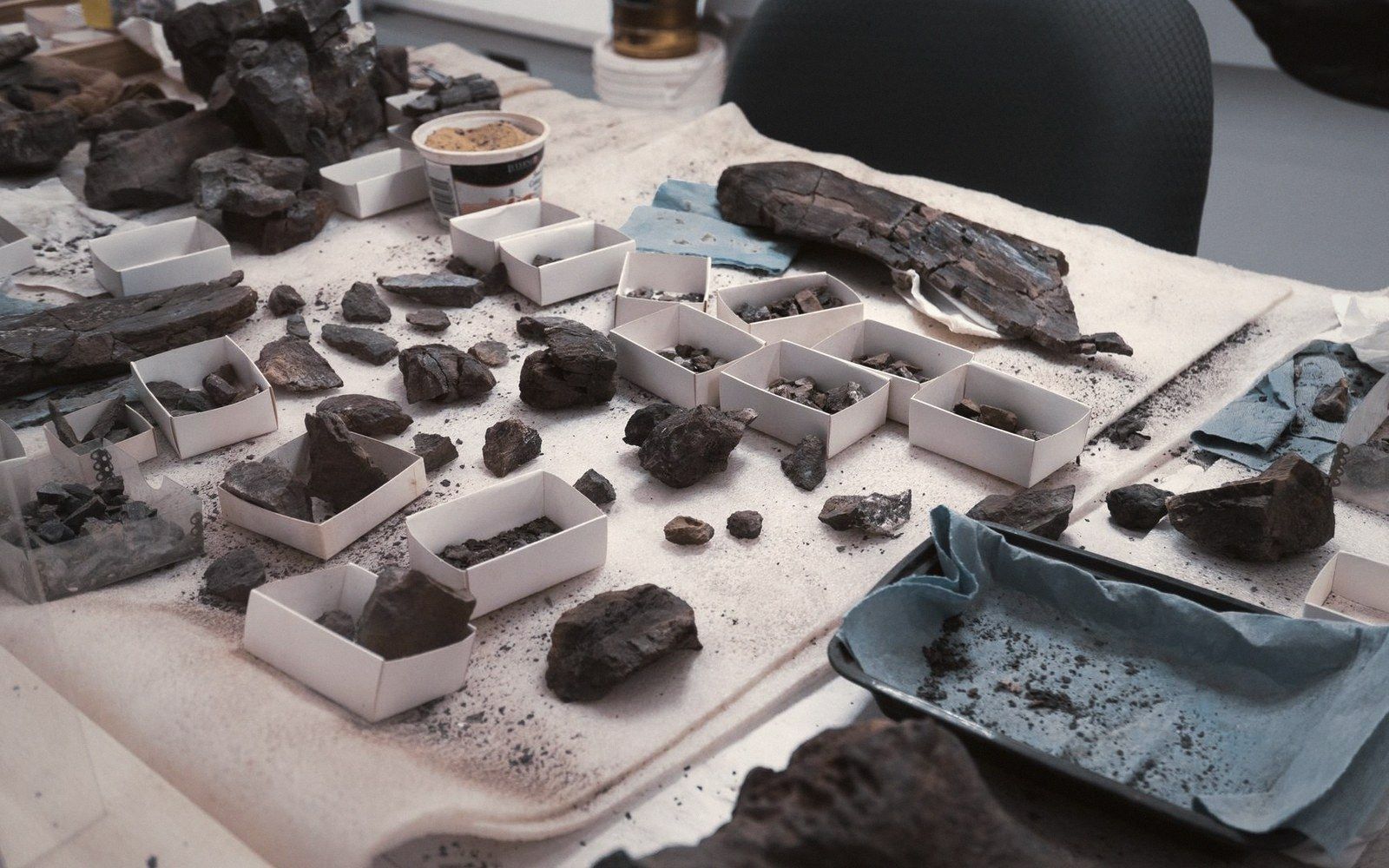
Drying is the enemy; consolidants are the truce
Waterlogged wood survives because its cell walls are saturated — water is literally holding the structure open. Remove that water without replacing it and the cells collapse inward, shrinkage runs to thirty percent or more in the worst-affected timber, and every tool mark on the surface is gone. Consolidation is the practice of swapping the water for something solid that keeps the walls apart while the object dries.
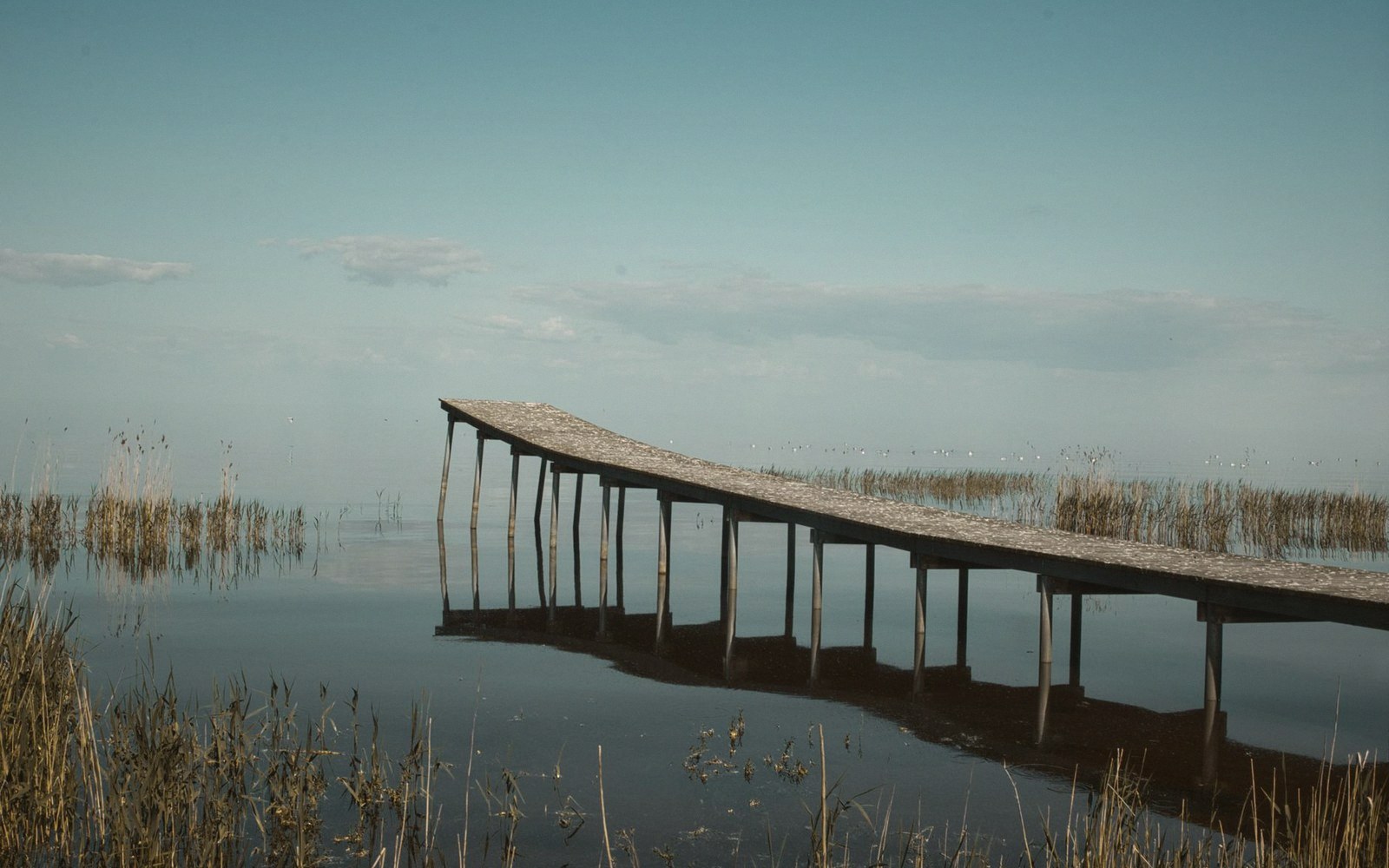
Uprights standing in standing water. Below the water table timber survives; above it, it does not.
Photo: Estonian Stalker / PexelsHow it works in practice
The dominant method since the 1970s has been polyethylene glycol, known universally as PEG. It is a waxy polymer that is water-soluble in liquid form, which means it can be introduced into saturated wood in solution and allowed to penetrate the cell lumens before the water is drawn off. Conservators work in stages: low-molecular-weight PEG (around PEG 200 or 400) is used first because its small molecules reach the inner cell walls; higher-molecular-weight grades (PEG 1500, 2000, 4000) follow to bulk-fill the larger voids. The wood is immersed in heated baths, often for months or years depending on section size — a substantial Bronze Age plank from a waterlogged causeway may require several years of treatment before it tolerates ambient air.
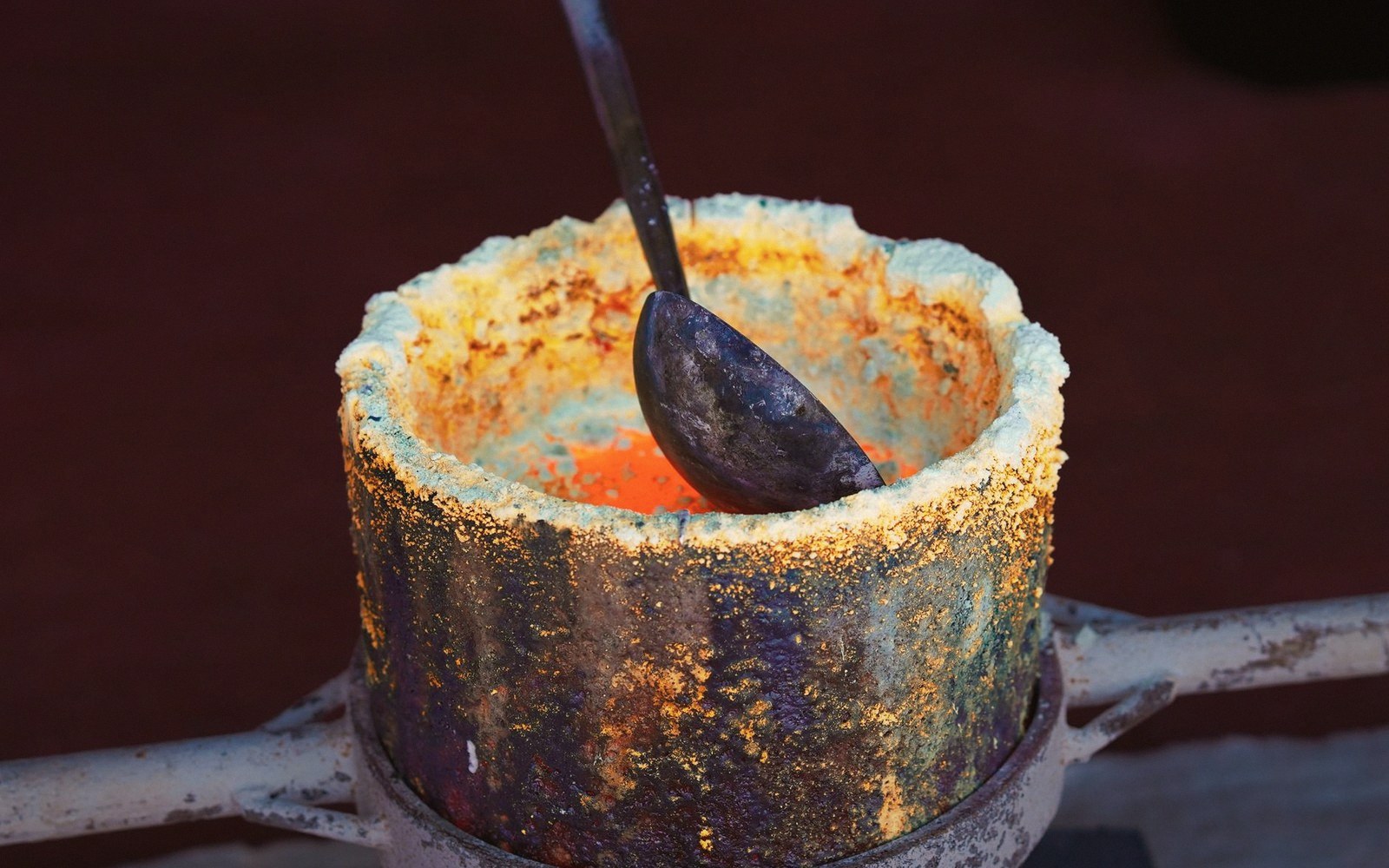
Charcoal, forced air and a crucible sitting in the fuel rather than above it.
Photo: Panta Singha / PexelsSucrose — plain sugar — has been used as a cheaper alternative, particularly for smaller objects, and is reversible if the surface is later re-wetted. Its main drawback is the risk of crystallisation and of microbial attack if humidity cycles. A third option, freeze-drying, is not a consolidant in the chemical sense but achieves the same structural goal by converting water to ice and sublimating it under vacuum, bypassing the damaging liquid-to-gas transition entirely; it can be used alongside PEG or on its own.
Materials and method
| Item | What the record says |
|---|---|
| PEG (polyethylene glycol) | water-soluble waxy polymer introduced in solution to replace water within cell walls; used in graded molecular weights |
| Low-MW PEG (200–400) | small molecules that penetrate inner cell walls first |
| High-MW PEG (1500–4000) | larger molecules used to bulk-fill voids after initial penetration |
| Sucrose treatment | cheaper, reversible alternative; risks crystallisation and microbial attack |
| Freeze-drying | removes water by sublimation under vacuum, bypassing the destructive liquid-to-gas transition; compatible with PEG pre-treatment |
None of these methods is invisible. PEG-treated wood tends to darken and carry a slightly waxy surface sheen; tool marks are preserved but may read differently under raking light than they would in untreated timber. The treatment is also largely irreversible once the polymer has penetrated and set within the cell structure — a decision made in the conservation lab that forecloses certain future analyses. Every consolidation choice is a trade-off between what survives and what is altered in the saving.