What Drying Costs
The fastest way to destroy waterlogged wood is to let it dry.
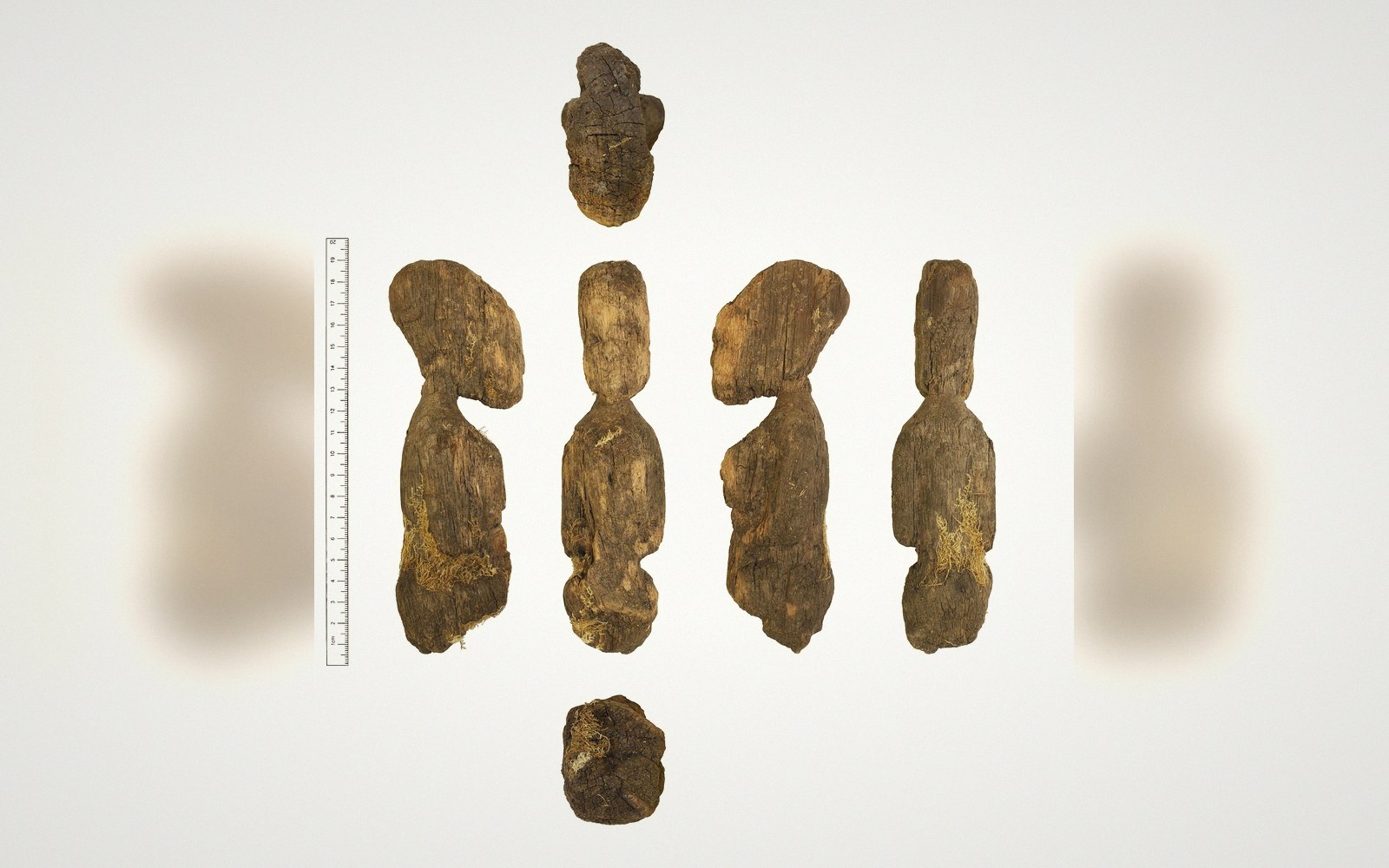
Wooden object after drying. Shrinkage of twenty to thirty percent in cross-section is common, and the surface detail goes with it.
Photo: Medieval Wooden Incomplete Figurine (FindID 709622) · Wikimedia CommonsThe Physics of Collapse
Waterlogged wood survives because every cell wall is saturated — in some cases, the water is doing structural work the degraded cellulose can no longer do for itself. The moment that water begins to leave, surface tension in the drying front pulls cell walls inward. What follows is not slow decay but sudden mechanical failure: shrinkage of twenty to thirty percent in cross-section is common, and in severely degraded timber it can exceed fifty. A roundwood stake that measured forty millimetres across in the trench may measure twenty-five once dry, and it will not be round anymore.
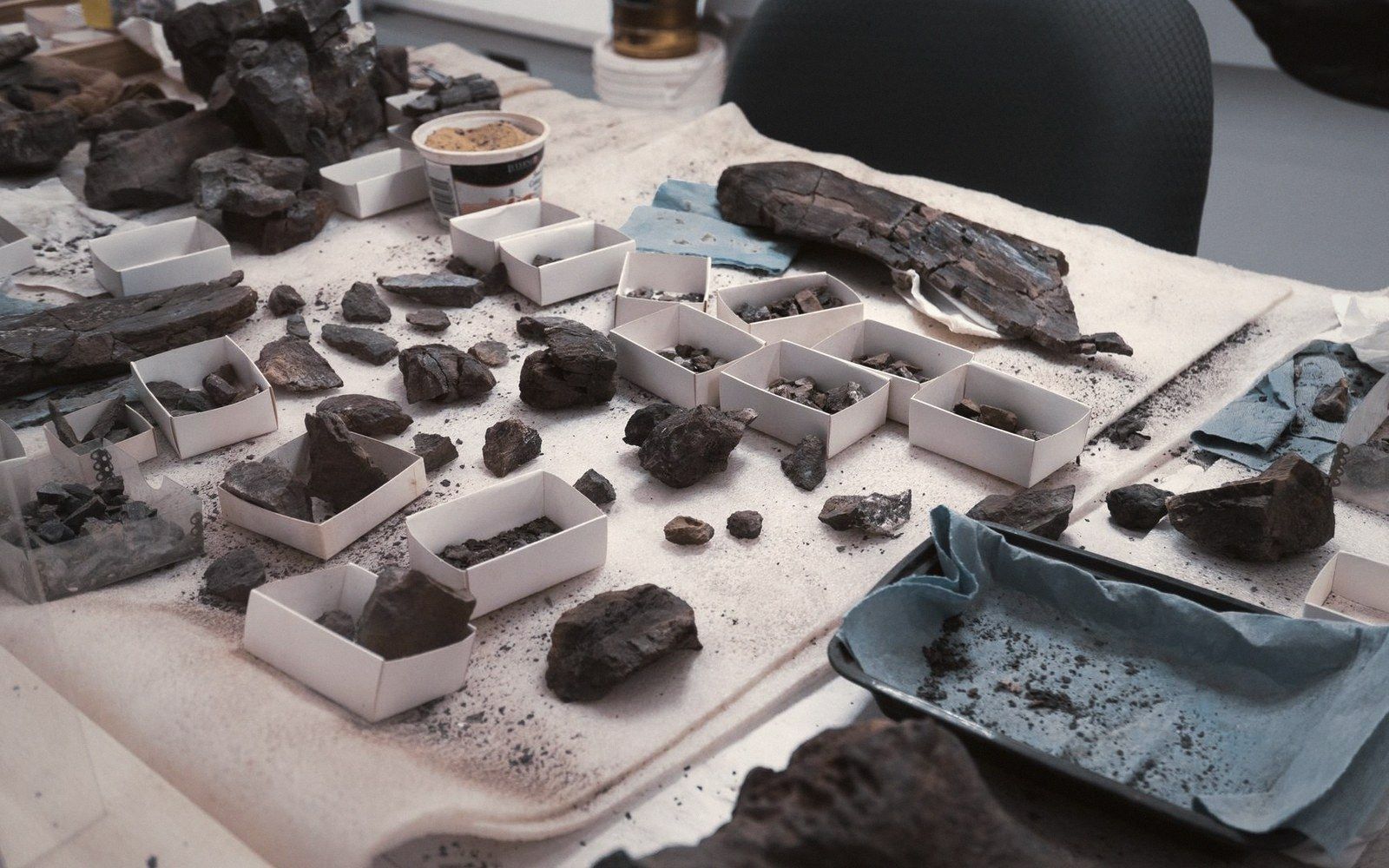 Plate iii
Warping compounds the loss. Wood does not dry uniformly. The outer sapwood releases moisture faster than the dense heartwood at the core, and the differential stresses twist, cup and split the timber along its grain. A plank that lifted cleanly from the peat arrives weeks later as something closer to a wood shaving. A post tenon, still intact after three thousand years, can lose its shoulder definition entirely — not because it decays, but because shrinkage closes the very gap that defined it as a joint.
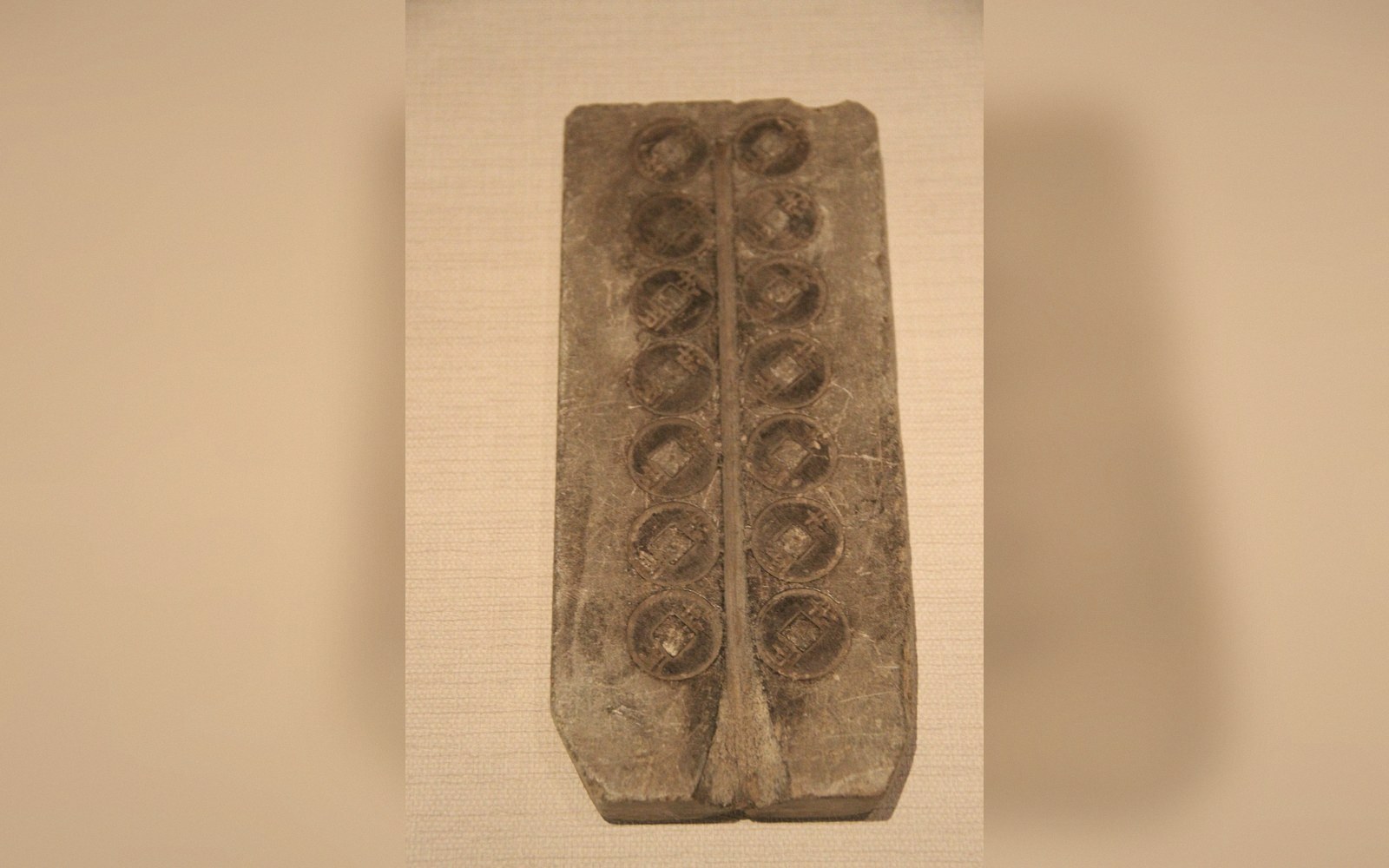
A stone mould: durable, reusable, and for that reason over-represented in the record compared with clay.
Photo: Stone Coin Mould 03 · Wikimedia CommonsWhat the Surface Carries
This is the loss that matters most to interpretation. Bronze Age woodworkers left readable traces on every surface they touched: the curved facets of an adze stroke, the flat register of a froe, the stepped kerf where a wedge split a plank along the grain. Reading a worked end depends on those facets surviving in three dimensions. Drying collapses them. The micro-topography of a tool mark — sometimes only a fraction of a millimetre deep — disappears into the compression of the outer cell layers, and with it goes the evidence for blade width, bevel angle and working direction. A timber that could have told you what kind of axe felled it and how the carpenter held it becomes mute.
The damage in numbers
| Item | What the record says |
|---|---|
| Shrinkage in cross-section | commonly 20–30% on recovery; over 50% in severely degraded timber |
| Tool-mark depth | often sub-millimetre; lost entirely to surface compression on drying |
| Warping cause | differential drying rates between sapwood and heartwood create internal stresses |
The same applies to rope impressions, cord wrapping, bark packing and any organic material resting against the wood surface. These textures survive only as long as the cells that hold their impression remain open. Let the wood dry, and the record is gone — not damaged, gone. No amount of later recording recovers what was not captured before the moisture left.
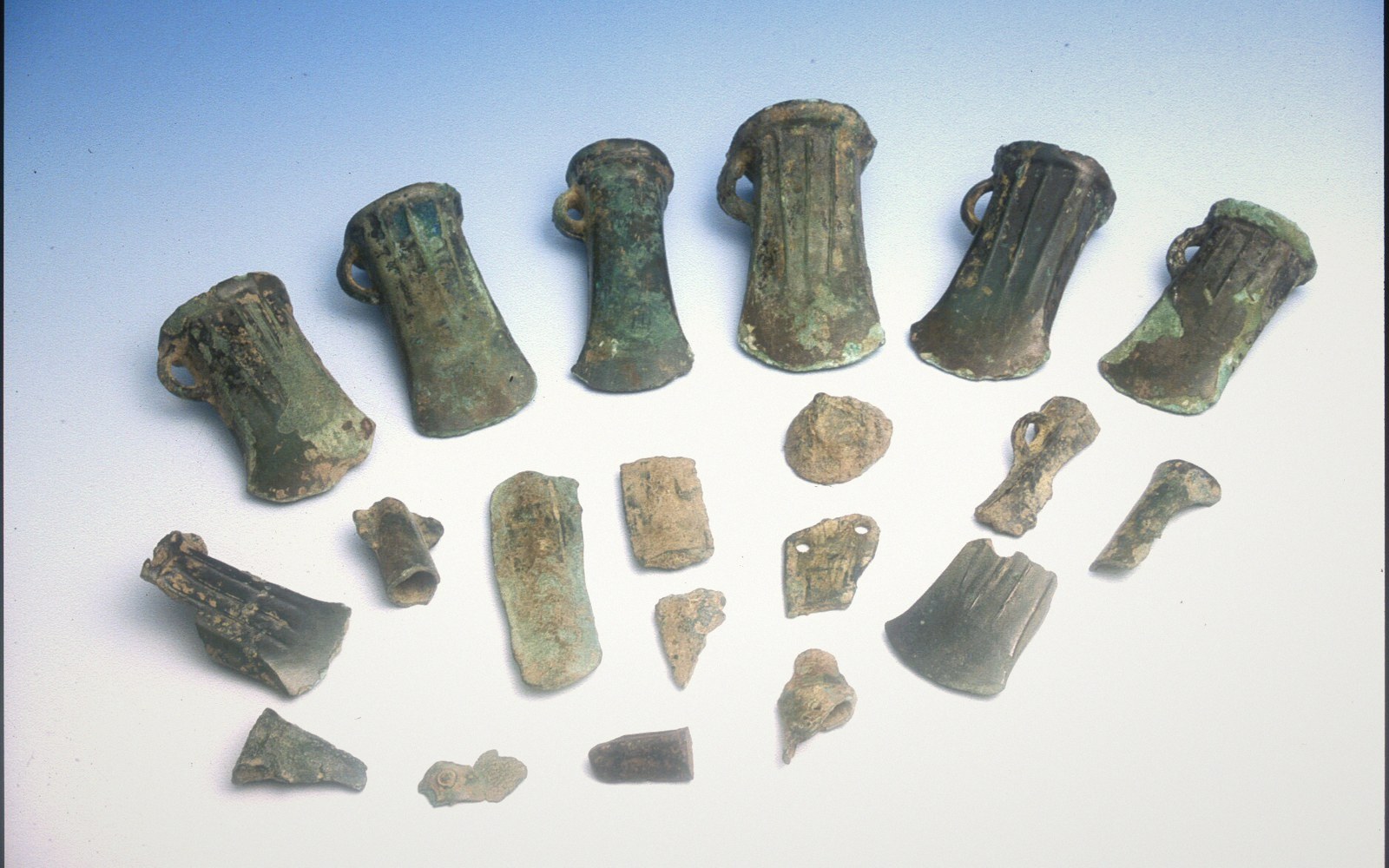
Broken bronze laid out for recording. Fragmentation is what makes a hoard readable as stock rather than as loss.
Photo: Bronze Age metalwork hoard (FindID 151245) · Wikimedia CommonsThe rule in excavation is therefore simple, if logistically demanding: keeping wood wet from the moment of exposure is not a conservation preference but an evidential one. Every hour a timber spends in open air without being wetted down is an hour in which something that cannot be recovered is being lost.