Felling and season
Tree rings can date a timber to a season, not just a year.
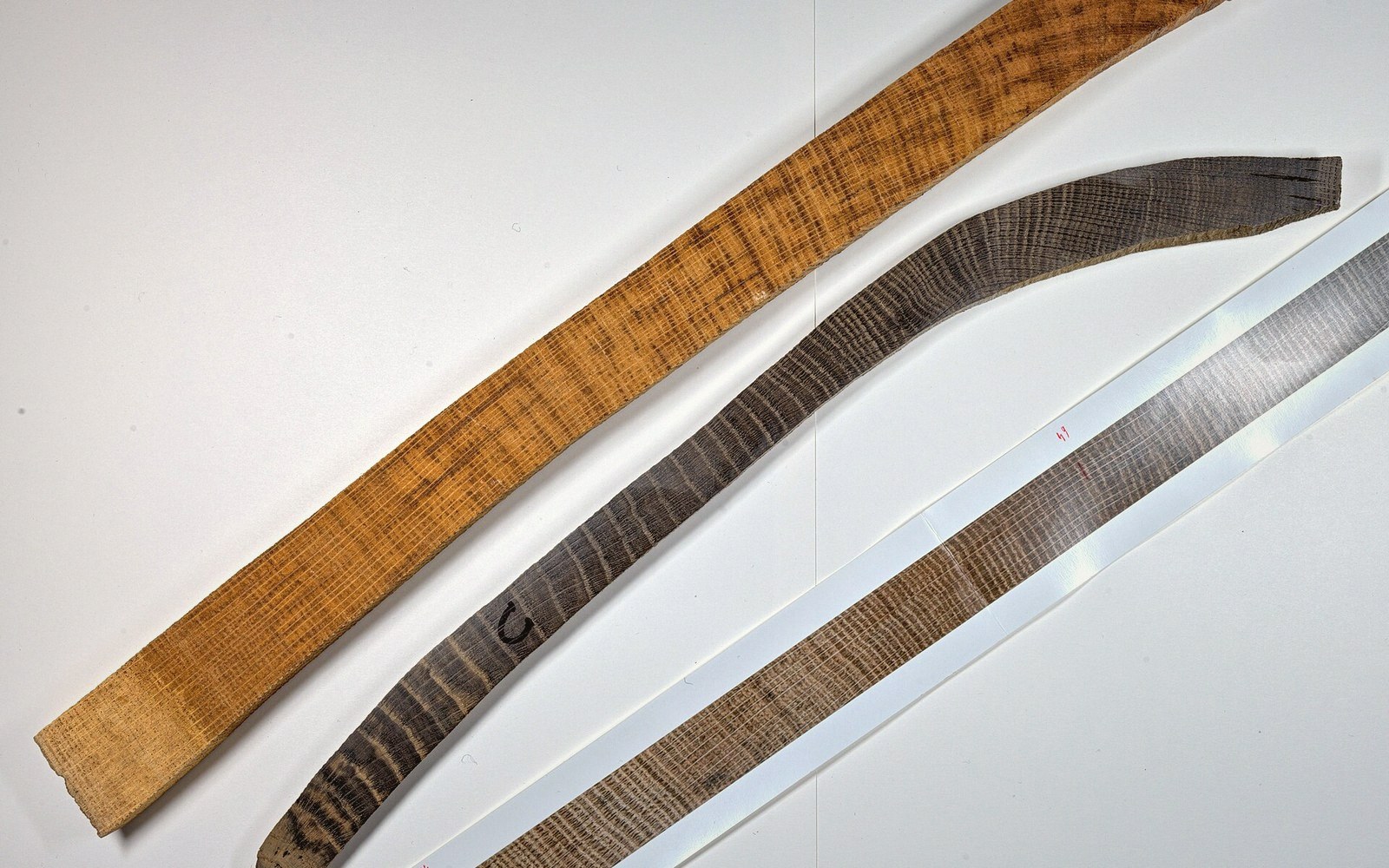
Ring sequences on prepared timber samples. The outermost ring can indicate the season a tree was cut.
Photo: Treering-samples hg · Wikimedia CommonsDendrochronology can date a waterlogged timber not just to a year, but to the time of year the axe felled it.
When a waterlogged timber comes out of the ground, the first question is when it went in. Dendrochronology — matching the width sequence of annual growth rings against a regional master chronology — can answer that to a calendar year. But the ring sequence itself holds a further piece of information that is easy to overlook: the condition of the outermost ring tells you when in the year the tree was felled.
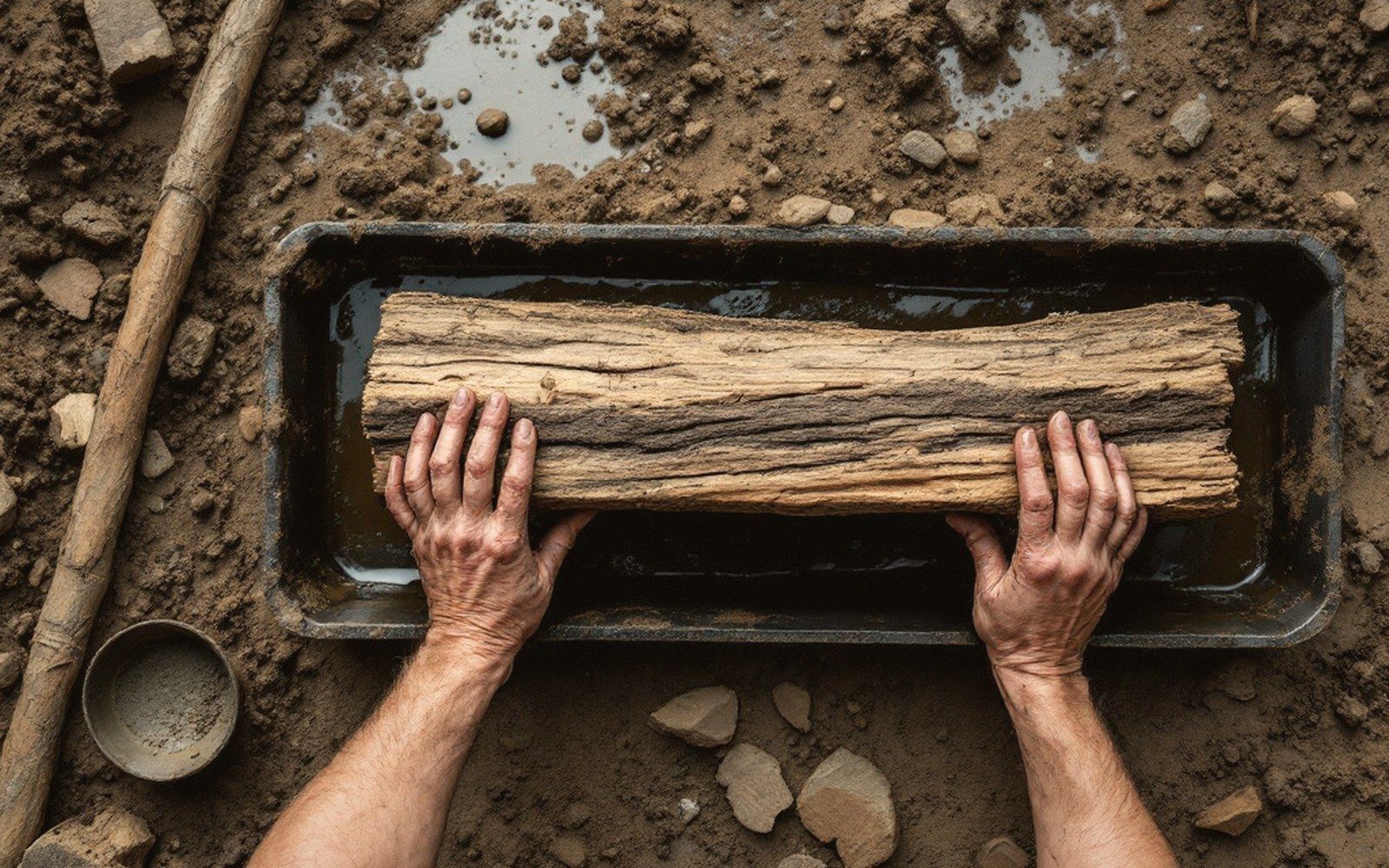
Waterlogged oak has the strength of soaked cardboard. It is lifted wet, carried wet and stored wet.
A tree lays down new wood progressively through the growing season, from spring's fast pale earlywood to late summer's denser, darker latewood. If a timber retains its sapwood — the soft outer rings between the functional heartwood and the bark — and that sapwood ends mid-ring, the tree was cut during the growing season, before that year's growth was complete: a spring or summer felling. A full outermost ring followed by intact bark suggests late-summer or autumn. Bark still attached is the best case; even without it, a specialist reading the boundary can often place the felling within a half-year.
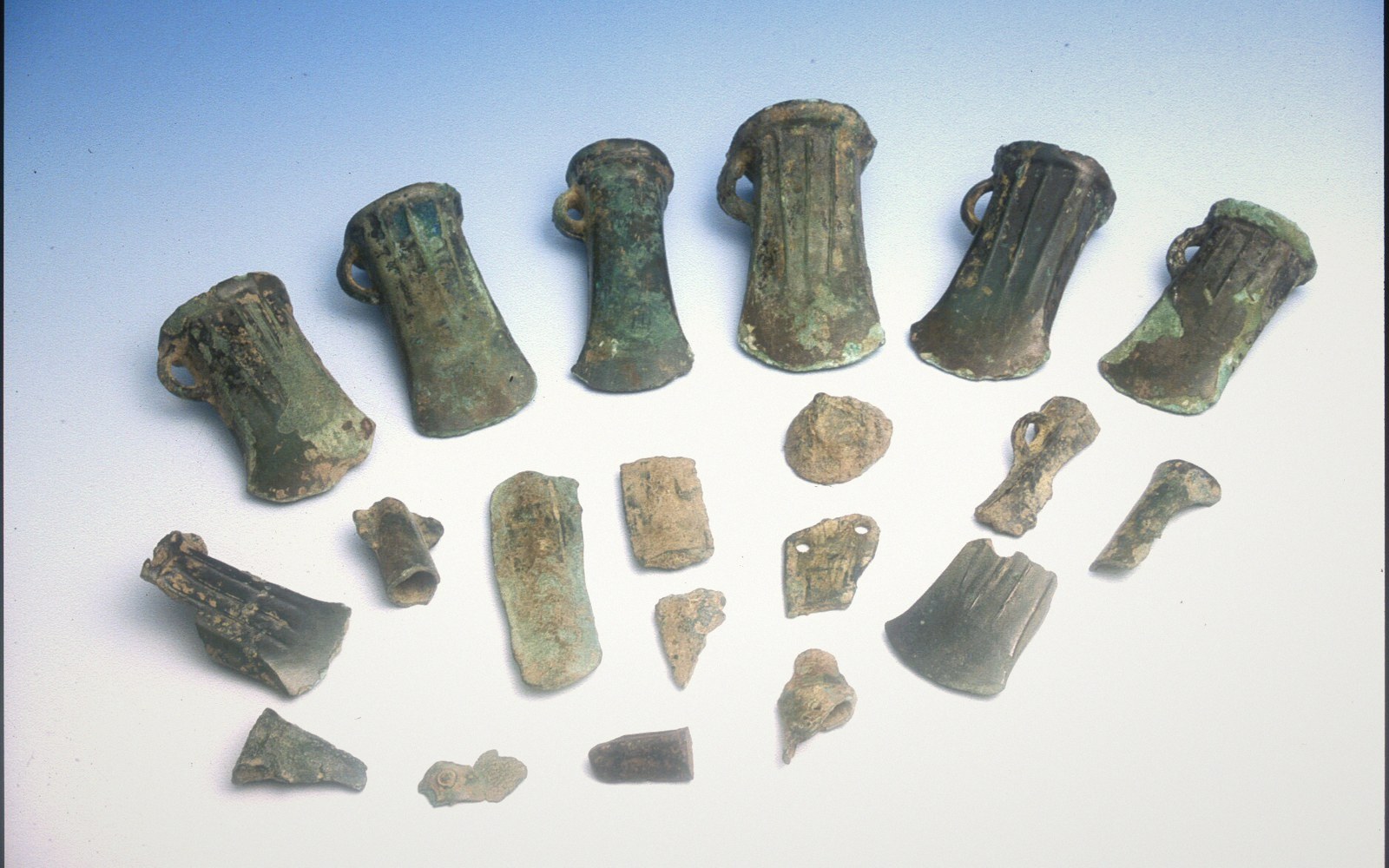
Broken bronze laid out for recording. Fragmentation is what makes a hoard readable as stock rather than as loss.
Photo: Bronze Age metalwork hoard (FindID 151245) · Wikimedia CommonsAt Flag Fen and comparable wetland sites, this seasonal precision feeds directly into questions about how construction was organised. Timber alignments require enormous numbers of posts, and the evidence increasingly suggests that felling was not opportunistic. Assemblages where a high proportion of timbers share the same felling year and the same seasonal signature point to planned, coordinated episodes — a workforce mobilised in winter, when agricultural labour slackened, cutting and driving posts into the fen before the water rose in spring. That picture is interpretive, but the seasonal signal in the wood is not.
Chronological signal in a single timber
- Heartwoodinner rings; structural record of tree age
- Sapwoodouter rings between heartwood and bark; carries the seasonal felling signature
- Earlywoodfast, pale growth from spring; wide cells
- Latewooddense, dark growth from late summer; narrower cells
- Barkwhen present, the strongest indicator of felling season
The limiting factor is preservation. Sapwood survives only when the timber has stayed waterlogged; even a brief drying episode can destroy exactly the cells that carry the seasonal signature. Keeping wood wet during and after excavation is not just a conservation concern — it is a condition of being able to read the record at all. The season a Bronze Age community chose to build is encoded in those outermost rings, and it does not survive a second drying.